
When 13 October 18:00 CET
Where Online, via Digital Samba
About
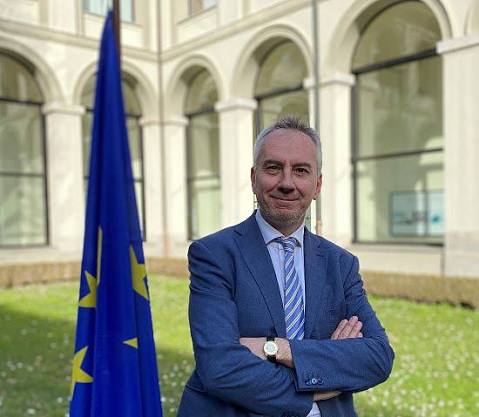
As digitalisation and increasingly pervasive AI reshape work, skills and even our own newsrooms, the story of education and training reform in the EU’s neighbouring countries is becoming one of the defining beats of our time. EUSJA is pleased to invite you to an online conversation with Massimo Gaudina of the European Training Foundation (ETF), the EU agency supporting education and training reform beyond Europe’s borders.
Why this matters to science journalists
While the EU’s attention often focuses inward, the ETF works with regions most exposed to rapid technological and economic change — the Western Balkans, Ukraine, Moldova, Eastern Europe, the Southern and Eastern Mediterranean, Central Asia, and sub-Saharan Africa. Each of these regions is undergoing its own transformation, with education and training systems shaped by distinct histories, politics and economic pressures. For journalists covering science, innovation, labour and society, these are rich, under-reported stories with real consequences for Europe’s future.
What will be covered
The ETF’s role in EU external relations policy — and how its freely downloadable publications can serve as a trusted, ready-made resource for science journalists working on education, skills and workforce topics.
The Tripartite Exchange Seminar (TES) 2026, held in Brussels on 10–12 June: Gaudina walked through the data and key themes from the seminar’s online session, from digital transformation and skills to working conditions and human-centred AI.
Social dialogue in the AI age: TES is a joint, multi-agency initiative coordinated by Eurofound, Cedefop, EU-OSHA and the ETF, centred on “digital, artificial intelligence and the role of social dialogue.” It brings together social partners and national and local government representatives from EU Member States, the Western Balkans, Ukraine and Moldova. Gaudina will discuss the seminar’s outcomes — and the often-overlooked role of journalists within social dialogue itself.
ISATCOVE, a digital platform enabling vocational education and training (VET) providers worldwide to benchmark their activities against best practice, set goals and track progress — a concrete example of how data on skills reform is being collected and shared globally.
Fighting science disinformation: why the work of science journalists is more essential than ever in countering fake news about science, health and innovation.
Who should attend
Science journalists, editors and communicators covering AI and society, education, skills, labour markets, and EU affairs — anyone who wants authoritative sources, hard data and fresh story angles from the EU agencies at the heart of these debates.