Category: Conferences & Events

  • Challenges for Independent Science Journalism

    Challenges for Independent Science Journalism

    (c) WCSJ 2015 Seoul
    (c) WCSJ 2015 Seoul

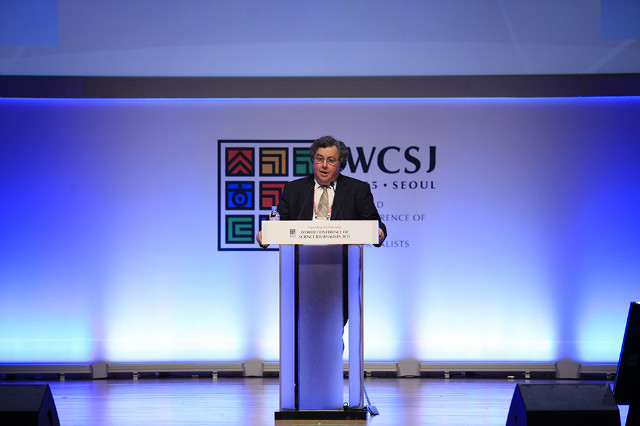
    This is a final retrospective note to the World Conference of Science Journalism in Seoul. The keynote address of June 11, 2015 delivered by Dan Fagin, Associate Professor of Journalism and Director of the Science, Health and Environmental Reporting Program at New York University’s Carter Journalism Institute is highly thoughtful and is an excellent summary of the current state of art of science journalism. His central message is that we have to fight for the values of journalism, depict  a confusing reality as best as we can by means of fact checking and storytelling and that we also have to experiment to stay on top of the fast transformation processes in the world. For example, NYU is training science communicators in both disciplines.You can also view this cool websites to know more about it.

    Dan Fagin introduced his speech by pointing out the tremendous changes the world has undergone since the fall of the iron curtain, the advent of globalization, sped up by digitalization, with the erosion of journalism as well as democracy.

    Include social implications of research

    ”In much of the world, we have more wealth but also more inequality”, he observed. “More markets but less unfettered debate. Governments and corporations are more influential and efficient than ever before, but also less transparent and accountable to the public.” Citizens can access more information than ever before, yet there is less deep journalism conducted in the public interest.

    Journalists demanded Fagin have to fight for the future of their profession and its role in sustaining democracy.

    “Verification — fact-checking – is what separates journalism from propaganda, and the scientific method is a tremendous form of verification … The best science journalists, and some of them are right here in this room, are relentless in their insistence that the weight of the evidence, not the preferences of the powerful, should drive our storytelling. They know that the purpose of science journalism is not to cheerlead for scientists, but to explain scientific developments in full context, including their social implications.”

    Scientists are only human with all deficits

    Science journalists just don’t quote people’s assertions, but they figure out where the most persuasive evidence lies. And they know that scientists are only human. Ongoing scandals of fraud and irreproducibility and negligent peer review teach the public that scientists are subject to the same errors of hybris and misjudgment and greed that afflict the rest of the society, including journalists—and Fagin asked:

    “If we science journalists don’t expose those defects in science and make a fuss about them, then who will? So yes, we science journalists really do have a crucial role to play in demonstrating that independent, unbiased, evidence-based journalism matters, and that journalism’s future as a profession is going to materially affect the world’s future.”

    Digital storytelling leads into the future

    Then Fagin went on with the convergence and divergence issues and explained:

    “The old distinctions between newspaper journalism and television journalism and radio journalism are melting away, and are being replaced by a hybrid model, housed on the Internet, that combines all of those kinds of journalism plus many more. If you go to CNN.com, for example, presumably a television site, you will see video, yes, but also text stories, data visualizations, audio podcasts, photo slide shows, interactive features, and more.” The same media users find with nytimes.com, npr.org or bbc.com. The same media convergence, Fagin believed, will be occurring all over the world.

    As a consequence, Fagin continued, students are required to “learn to tell stories in as many ways as possible because that is what the digital journalism marketplace now demands. We’re also now teaching them business and entrepreneurial skills – skills they will need in order to identify opportunities in the digital space and to exploit those opportunities, either by building new journalistic sites or products or even by developing new tools for digital storytelling”.

    WCSJ 2015 Seoul
    WCSJ 2015 Seoul

    The drawbacks of atomized audiences

    The described media convergence is allowing students to pick the very best possible combination of tools to tell every particular story in the most compelling possible way. Fagin is convinced that despite problems with access and censorship and broken business models, this is a golden time for science storytellers, “a time when they can tell stories that are more vivid, more comprehensive, more contextual, more transparent than ever before.”

    Then Fagin went into the drawback of convergence, which is divergence. “In a digital universe of essentially unlimited searchable, accessible content, our audiences are fracturing – they’re splitting or, and this is the term I prefer: atomizing”, he told his Seoul audience. The magic of web search and the tremendous growth of social media networks are making it easier than ever for individuals to “build their own information bubbles that incorporate only those ideas, topics and opinions that mesh smoothly with their own ideologies and interests”.

    This has not only eroded the financial foundation of media companies and budget, employment of high quality journalists and production of premium content, regretted Fagin. While traditional media knitted pluralistic societies together because users also had to read articles which they were not really interested in, audiences have been fractured, not to say atomized , with very adverse effects.

    ISIS, CIA and Greenpeace create their own truths

    “It creates many more opportunities for mischief by governments, corporations, advocacy groups and others who are much more interested in gaining votes, customers and contributors than in actually informing people. These special interests know that the journalism industry is economically weak, and that information bubbles are easier to create in the digital era then ever before, so they are capitalizing on the trend toward niche audiences.”

    And this is  being exploited by all sort sof interested parties, Fagin observed, and presented a long list of clients: ISIS, CIA, the Chinese Communist Party, Exxon-Mobil, Greenpeace. Each of these groups is constructing their own “self-interested version of reality and then marketing that vision to advance their own agendas”, promoting their own truths.

    “Now I’m not about to claim that this kind of propaganda hasn’t been thriving for centuries,” Fagin clarified, “and I’m not naive enough to assert that independent journalists have a unique claim in aspiring to the closest possible depiction of reality – of course we don’t. We journalists are flawed, and sometimes corrupt, and always biased by our past experiences.”

    Without journalism it will be a world of spin

    And Fagin added a phrase which is debatable whether journalists with all limitations listed above really make the difference: “But at least our first loyalties – when things go right, at least – our first loyalties are to our audiences, not to some hidden (or sometimes explicit) self-interested agenda. If we journalists go away – and there’s no guarantee that someday we won’t – there will be nothing left but a world of spin. That’s not a world I want to live in, and I don’t think you do either.”

    Fagin reinforced the aforementioned that “we journalists are in the business of depicting reality, and we need to see the world as it is, not as we wish it to be.

    As to an outlook Fagin predicted that “we are surely going to see much more journalistic content produced directly by non-journalists, especially by experts who can communicate with authority. Scientists are very much at the leading edge of this trend, as the rapid growth of science blogs shows”.

    Journalism schools organizes workshops for science communicators

    What’s crucial, Fagin noted “is that those stories need to be infused with core journalistic values like verification and clarity and transparency and fairness and context. Professional journalists will, I think, be spending a growing percentage of their time mentoring these non-journalist subject-matter experts and editing their work”.

    To train non-journalists in this will be a future field of engagement of journalism schools. At NYU, Fagin stated, more than 400 PhD students and post-docs were trained over the last six years across the science disciplines as well as medical students in the fundamentals of effective, ethical science storytelling. For this purpose special Science Communication Workshops have been organized at the university.

    Fagin’s closing remark was an appeal to fight for the values of journalism and at the same time not to be too rigid and experiment with new forms: “We have to try everything to find a sustainable future for science journalism, so we are. Bold, relentless experimentation, carried out with integrity and transparency, is going to have to be the lodestar for our journey.  In the end, what matters is not which or even whether newspapers or magazines or television broadcasts survive, but whether the values of journalism survive.
    WCSJ 2015 Seoul
    WCSJ 2015 Seoul

    For more information: danfagin.com

    Full text:
    https://www.scribd.com/doc/268332933

    I’m grateful to Estrella Burgos, University Autonomous Mexico, editor Como ves and WCSJ 2015 Seoul Programm Committee for having this important session brought to my attention.

    Conference website with pictures of the event: https://www.wcsj2015.or.kr:447/wcsj2015/main/main.php

  • Last and First Dance

    Last and First Dance

    The winners (c) Goede
    The winners (c) Goede

    Day 4 and end of WCSJ 2015 Seoul. Last sessions with dwindling attendance, while the General Assembly of the World Federation got under way. Final act: The closing ceremony with a little Oscar taste and the announcement of the WCSJ 2017 venue, hot contest between Europe and the US.

    The GA was off to a good start: More than 50 percent of the member organization attended the  annual meeting at the COEX convention center near Hangang river. Federation executive director Damien Chalaud presented achievements during the past two years:

    World Federation Executive Director (c) Goede
    World Federation Executive Director (c) Goede

    +++ 51 member organizations representing 9000 science journalists+++15 new national associations acquired+++45 mentors taught+++ 140 journalists trained in 50 countries+++3 online courses on Science Journalism, Ebola, Viral Hepatitis+++8 global conferences organized

    “Respect each other!”

    The challenge according to Damien: to further diversify the projects with more training units adapted to many different regions and local requirements. The training program SjCOOP, a long-term approach which had been very successfully applied to the needs of Africa and Arabic countries, in the final round implemented in Southeast Asia, will be phased out sooner or later. Charity organizations in Canada will be targeted as new funding sources.

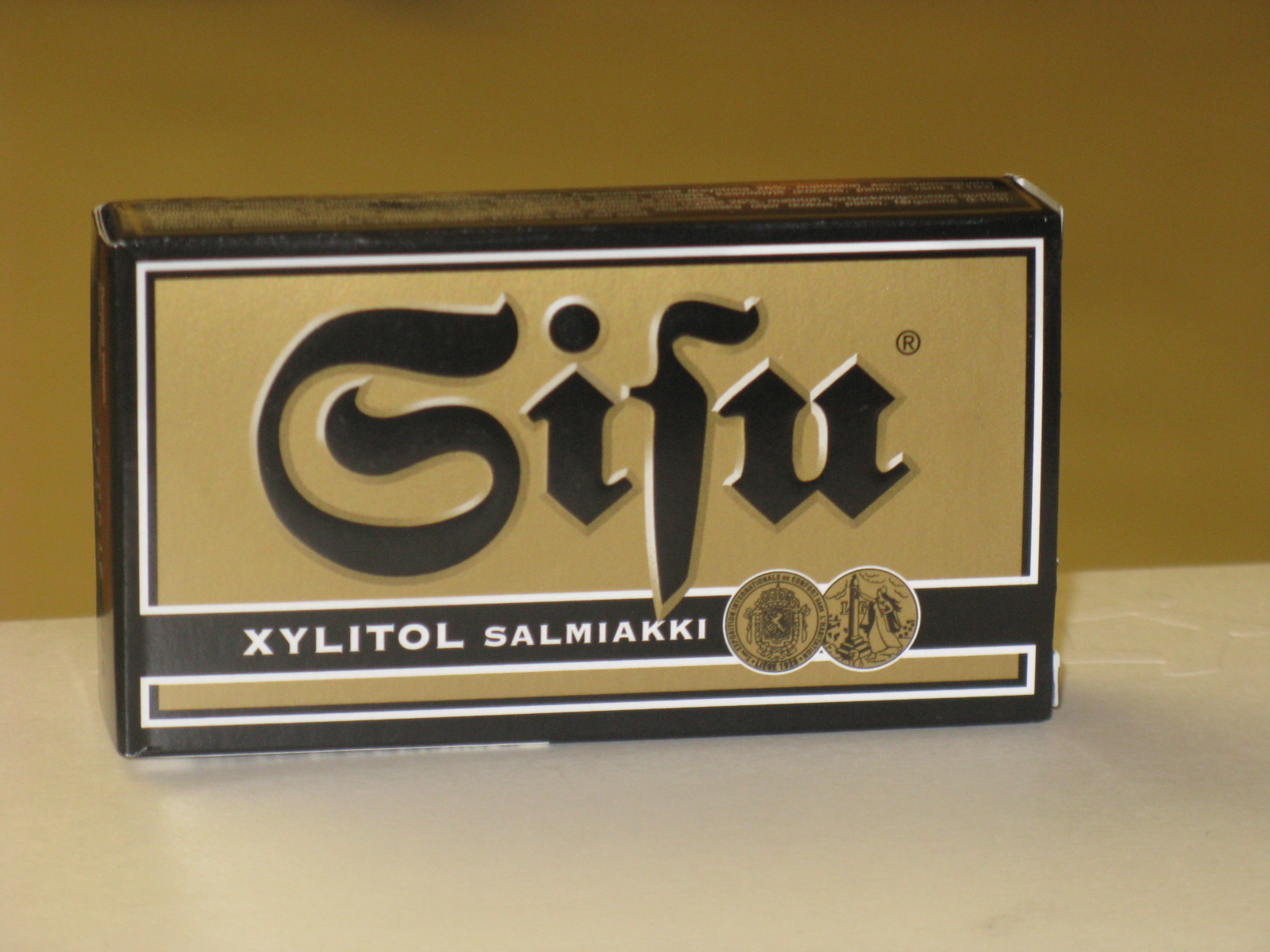
    Salmiak for the incoming board members (c) Goede
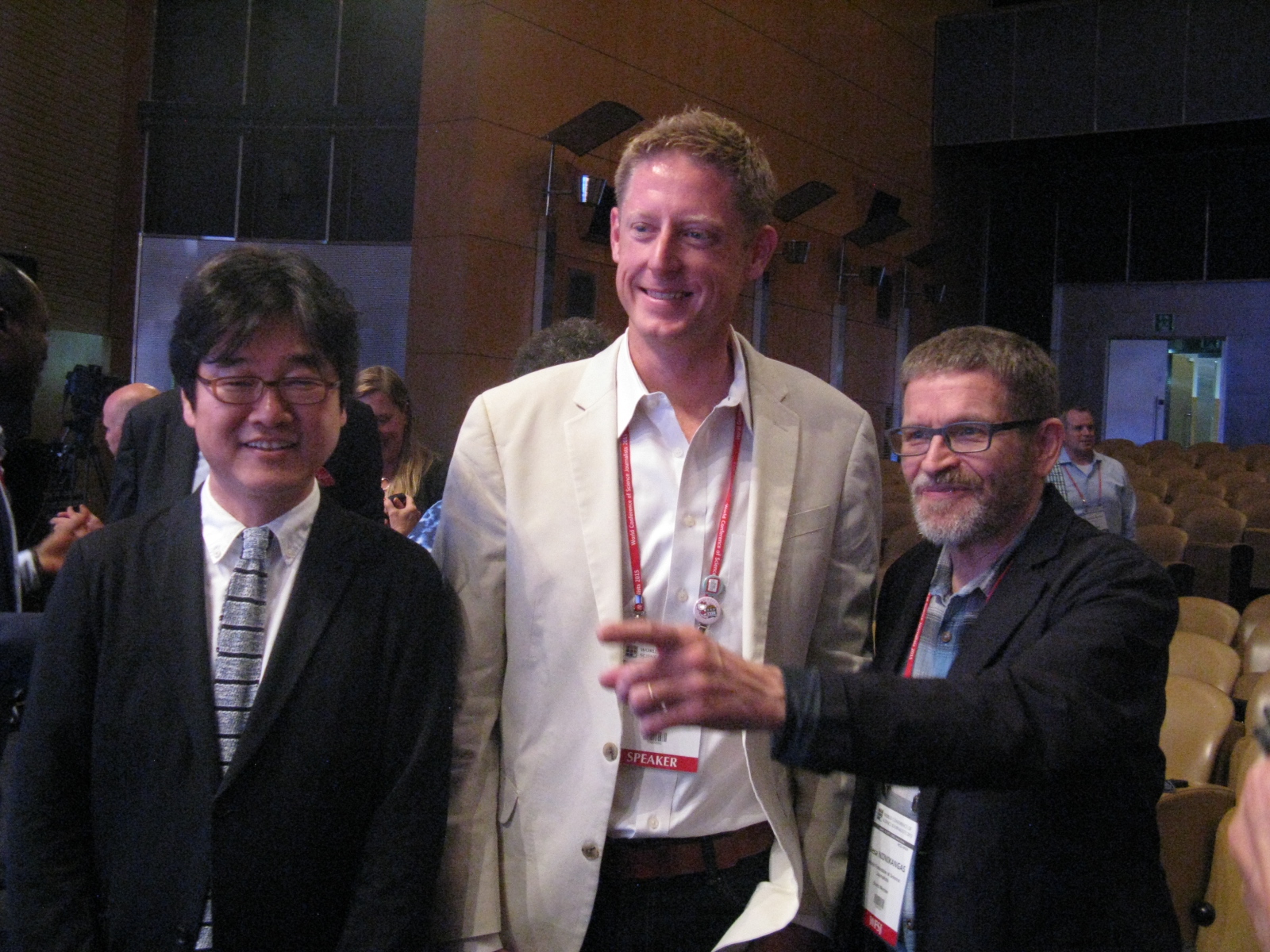
    Outgoing: Kathryn O’Hara (left), Vesa Niinikangas (center), Pallava Bagla (right)  (c) Goede

    Vesa Niinikangas, past president and outgoing board member, “happily passed on the burden to three incoming board members”, as he jokingly remarked. Then he became serious. His advice:

    +++Respect each other and listen to each other+++Read immediately the bylaws and mission statement and repeat this exercise periodically+++Pay attention to RELEVANT details+++Express you opinion, but don’t keep talking all the time+++You are the directors and decision makers+++In the public sphere you ALWAYS speak with 1 voice+++You turn to change the world, but have a history to be proud of

    “Make people unhappy!”

    Vesa gave away Finnish chewing gum to the outgoing officer. The incoming received Finnish salmiac pills, “very bitter ones”, as he stressed with his northern humour.

    Bitter pills for successors (c) Goede
    Bitter pills for successors (c) Goede

    A different tack took Pallava Bagla, who had “brought the flavours of India” into the board, as he said and added, smilingly: “I look back at a four year rollercoaster ride.” His piece of advice. Journalists are not to make people happy, but unhappy. “If everybody is unhappy, you are ready to enter nirvana”, Pallava expects. The discussion about better communication, more transparency, and the journalistic designation should be kept in the loop. “If you don’t know it, whom else do you expect to find answers?”

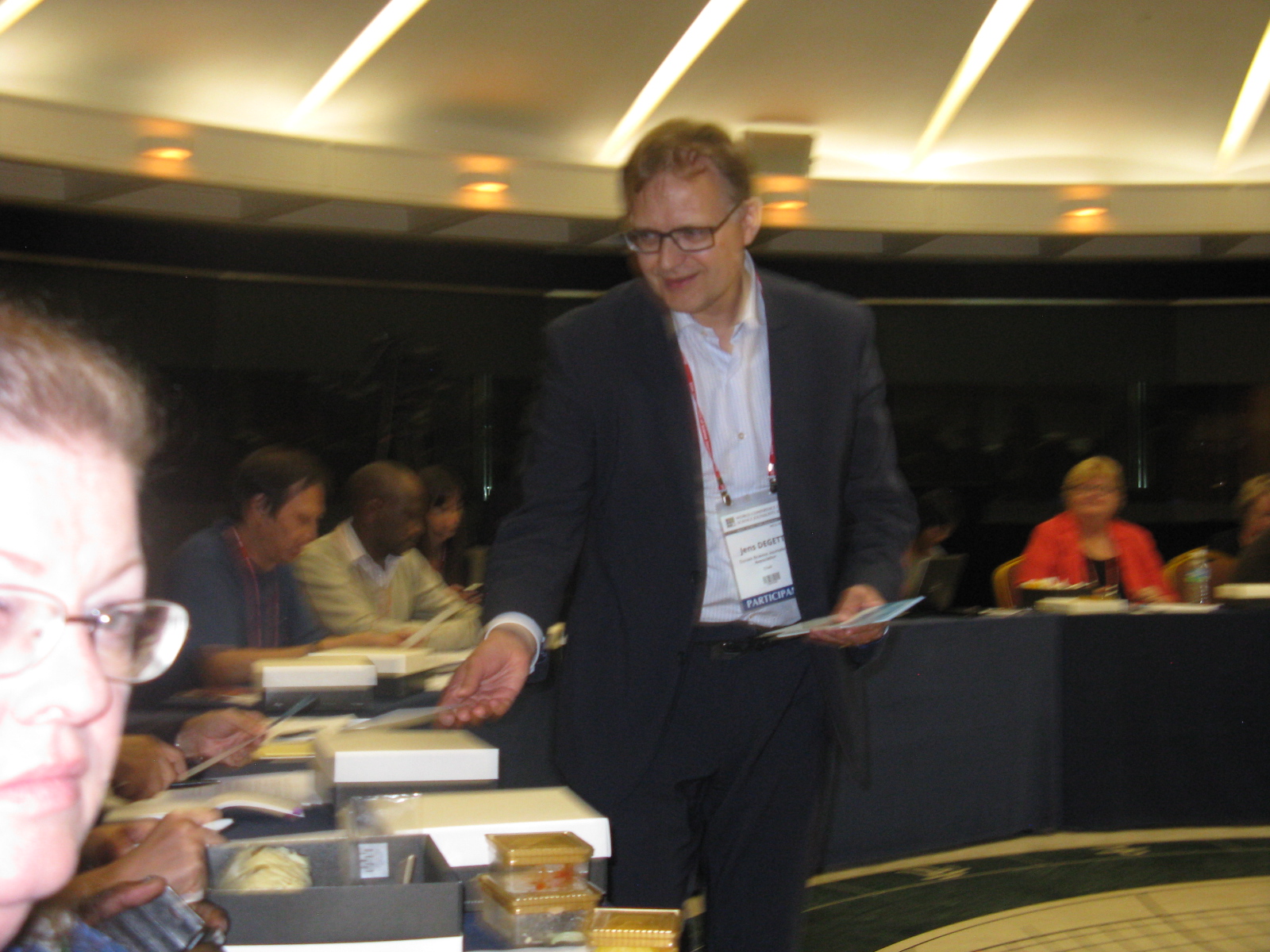
    Jens Degett announces European Conference (c) Goede
    Jens Degett announces European Conference (c) Goede

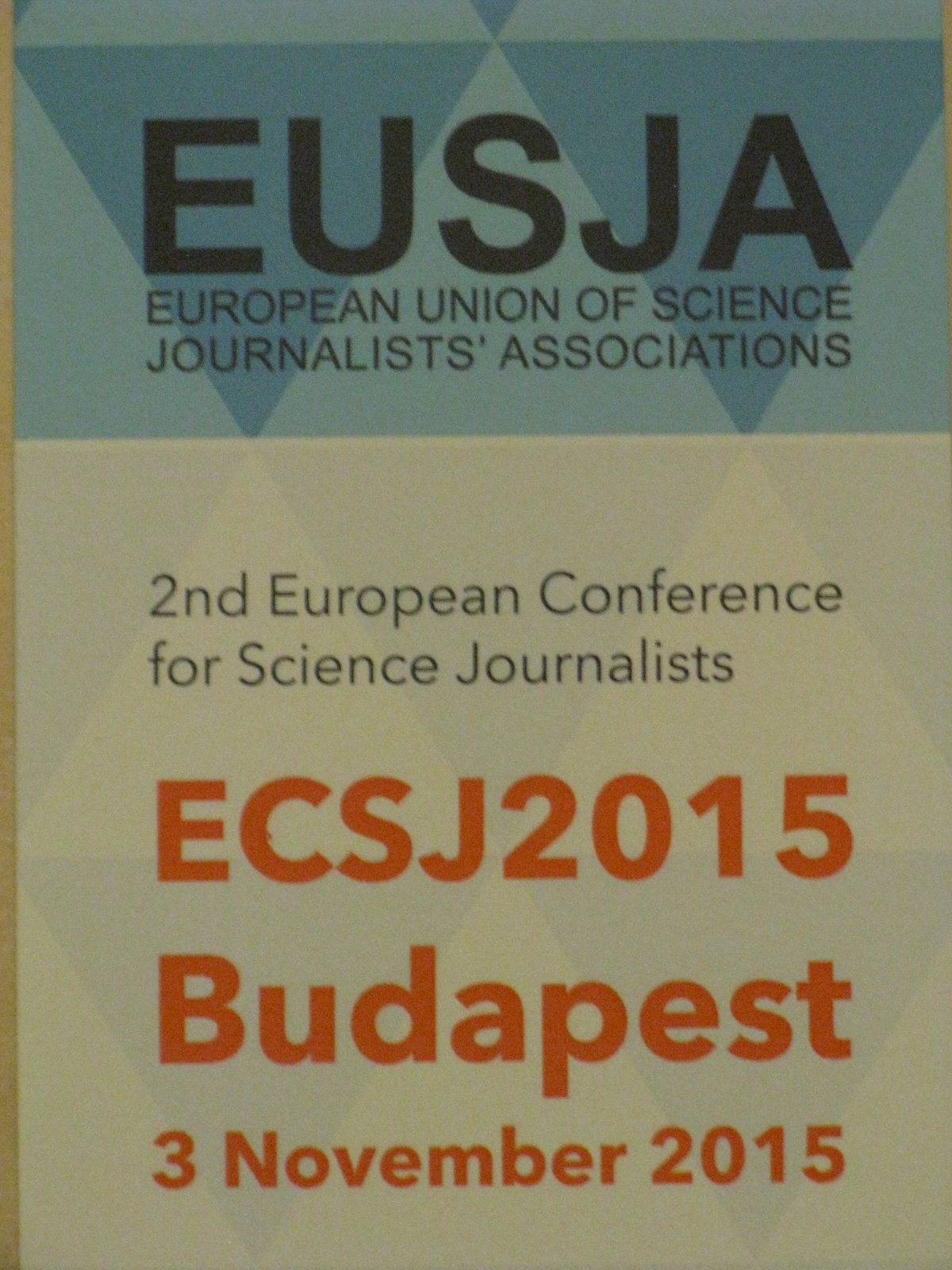
    At the end, Jens Degett, the Danish delegate and organizer of the 2nd European Conference of Science Journalists in November in Budapest, announced the event and passed out invitations.001

    “If you are going to San Francisco …”

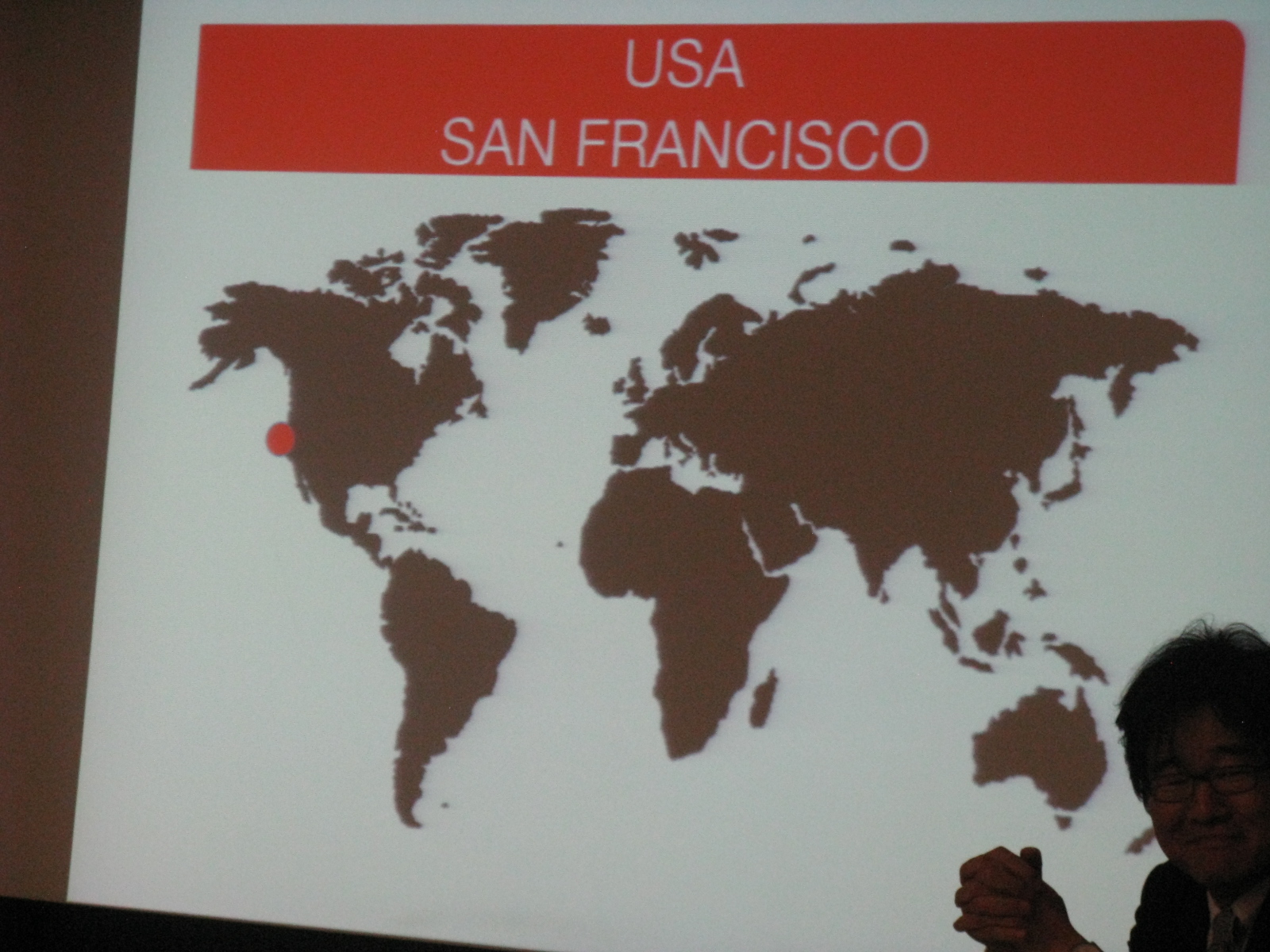
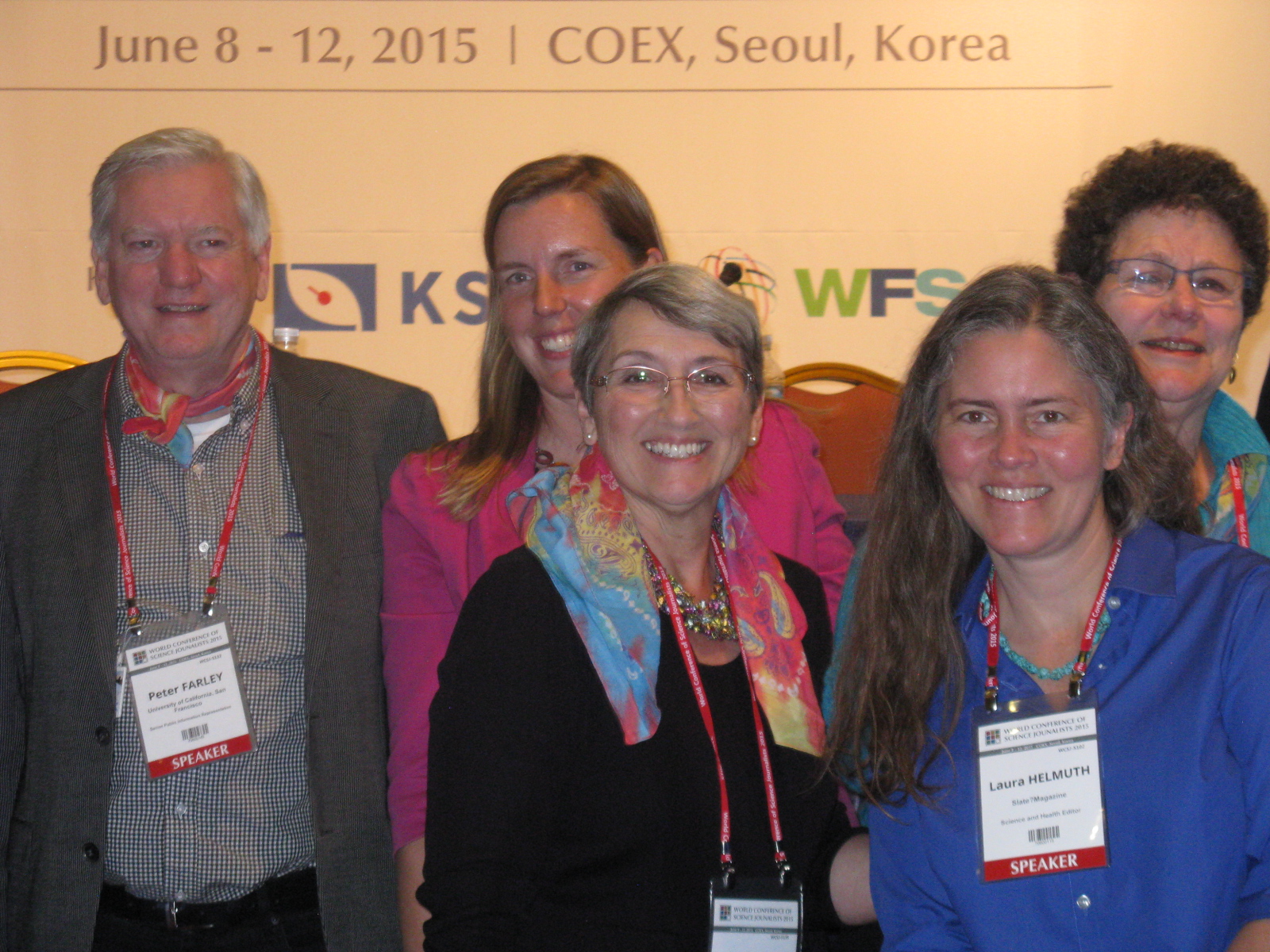
    In the closing ceremony, the winners of the contest took the floor. Ron Winslow and Cristine Russell, former presidents of the National Association of Science Writers NASW went on stage. The next world conference will be held in San Francisco. For 2017 they promised a powerful scientific and  journalistic program.

    Presidents: incoming Curtis Brainard (center), outgoing Dr. Chul Joong Kim (left), past Vesa Niininkangas (right) (c) Goede
    Presidents: incoming Curtis Brainard (center), outgoing Dr. Chul Joong Kim (left), past Vesa Niininkangas (right) (c) Goede

    The speakers honored that Copenhagen had submitted a strong proposal and with both cities in the contest science journalism had won. The Bay Area offered the chance to reach out to the South and include Latin America.  Scott McKenzie’s famous “If you’re going to San Francisco you should wear some flowers in your hair” was played and the US American delegation started to dance.

    “Narrow the gap of conflict!”

    After the new president of the World Federation, Curtis Brainard, had introduced himself, the organizers and hosts of the Seoul conference said good-bye, Dr. Chul Joong Kim and Shim Jae-oek. Shim found very kind words, as warm as the hospitality visitors had found in Korea’s capital.

    Shim Jae-eok--the deep one (in translation) and hearty (c) Goede
    Shim Jae-eok–the deep one (in translation) and hearty (c) Goede

    “We motivated you to expand your horizon”, Shim said, picking up on the conference motto. With this new knowledge please contribute “to narrow the gap of discrimination and conflict in the world”, the president of the Korean Science Journalists Association continued. “I was fueled by your energy and you expanded my own horizon”, before he finished:

    WCSJ Seoul #4 021“See you in San Francisco.”

  • Who am I? And if so—how many?

    Who am I? And if so—how many?

    iiiiii-yaaaaaaa ... (Kampfschrei) (c) Goede
    iiiiii-yaaaaaaa … [battle cry] (c) Goede
    The title of a famous German bestseller applies to science journalists. Day 3 of WCSJ 2015 Seoul tried to identify a rare species by the name of _science journalist_. But before, yesterday’s sexism session blew over, delayed in time and brought some unpredicted results.

    It was in the evening hours. Young Koreans, highly skillfully and determined, presented taekwondo martial arts. As if 30 Bruce Lees had conquered the stage. But a piece of news spread around like wildfire and almost stole the fighters the show. The nobel laureate who had reasoned at the beginning of the conference about the creativity of science was charged to have brought out at midday’s luncheon sexist remarks. On BBC, a witness described what she had heard. Most renowned scientific institutions distanced themselves from the scientist. Media, blogs and twitter glowed.1

    New African term: Science Media Practioner

    Damien Chalaud, WFSJ Ex. Dir. w. moderators Veronique Morin and Curtis Brainard (c) Goede
    Damien Chalaud, WFSJ Ex. Dir. w. moderators Veronique Morin and Curtis Brainard (c) Goede

    In the morning, many participants of the conference had critically looked into themselves in an effort to find their identity. The session “50 Associations. One conversation”, organized by the World Federation of Science Journalists WFSJ, co-organizer of the Seoul conference could have been titled also “Who am I? And if so—how many? To achieve one unifying conversation, the participants need to know who they and their partners are. And that apparently has become in the past couple of years more difficult than ever before.

    Two striking examples. Mandi Smallhorn, president of the African Federation of Science Journalists, stated that the fight about what science journalists are supposed to be has become “vicious”.  To avoid further friction, the Africans have come up with an inclusive term: Science Media Practitioner.

    SjCOOP Training Asia (c) Goede
    SjCOOP Training Asia (c) Goede

    “Make peace, not war!”

    Before, Pallava Bagla, member of the WFSJ board of directors, had described his work as television man, journalist, writer and photographer. Because of all these different hats he calls himself science communicator. Because of regional and cultural differences in the definition of what a science journalist exactly is, Pallava argued that the Federation should be “a wide umbrella”, under which everyone conveniently fits.

    The discussion had been started by Werner Hadorn, Switzerland, WFSJ co-founder, author of its first constitution and president emeritus of the European Union of Science Journalists’ Associations EUSJA. He regretted that in a clash over the disputed identity, science journalists or science communicators, various member organizations had left the European body. “Make peace, not war!”, demanded Werner.

    More joint projects could ignite more communication

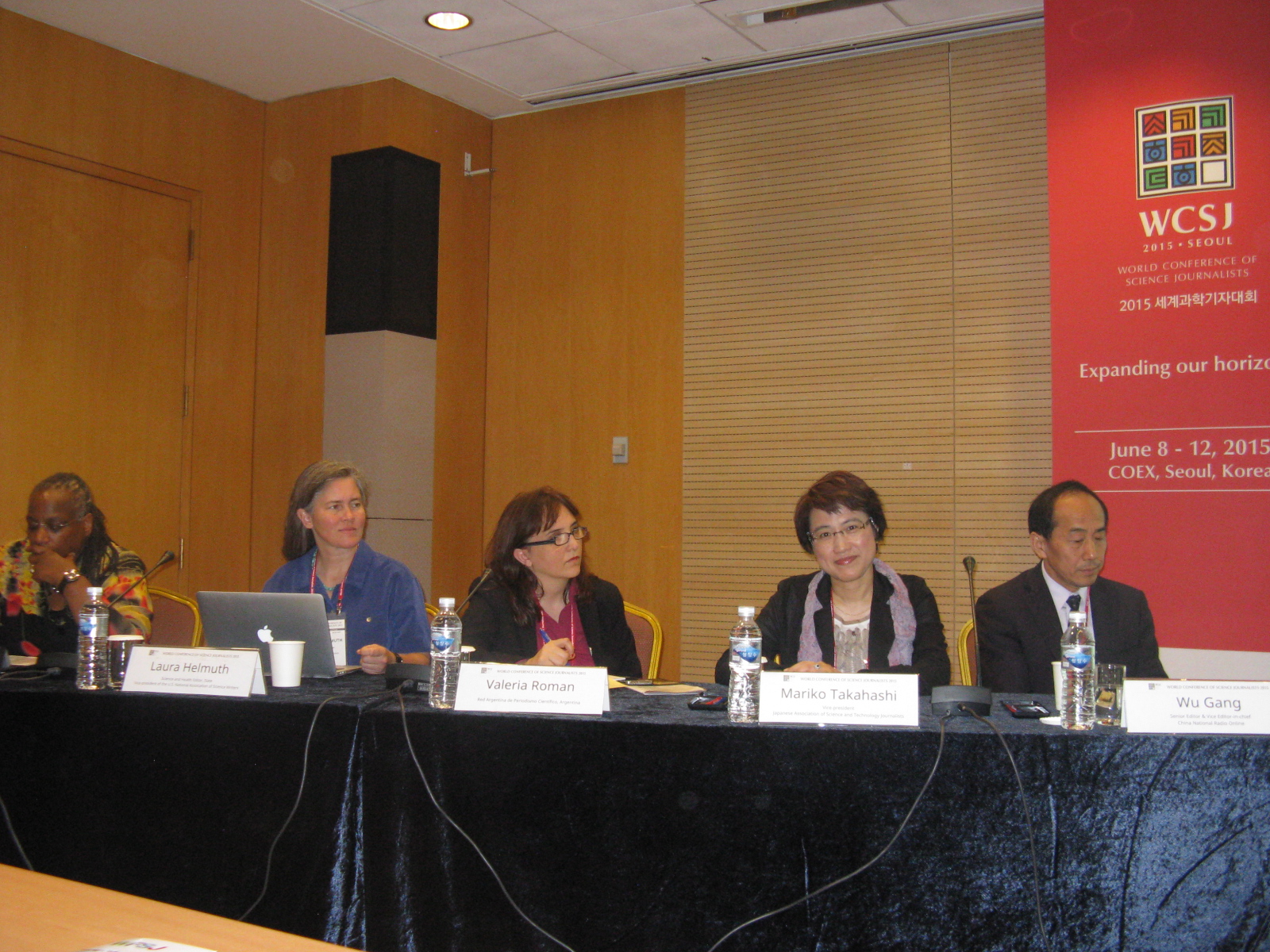
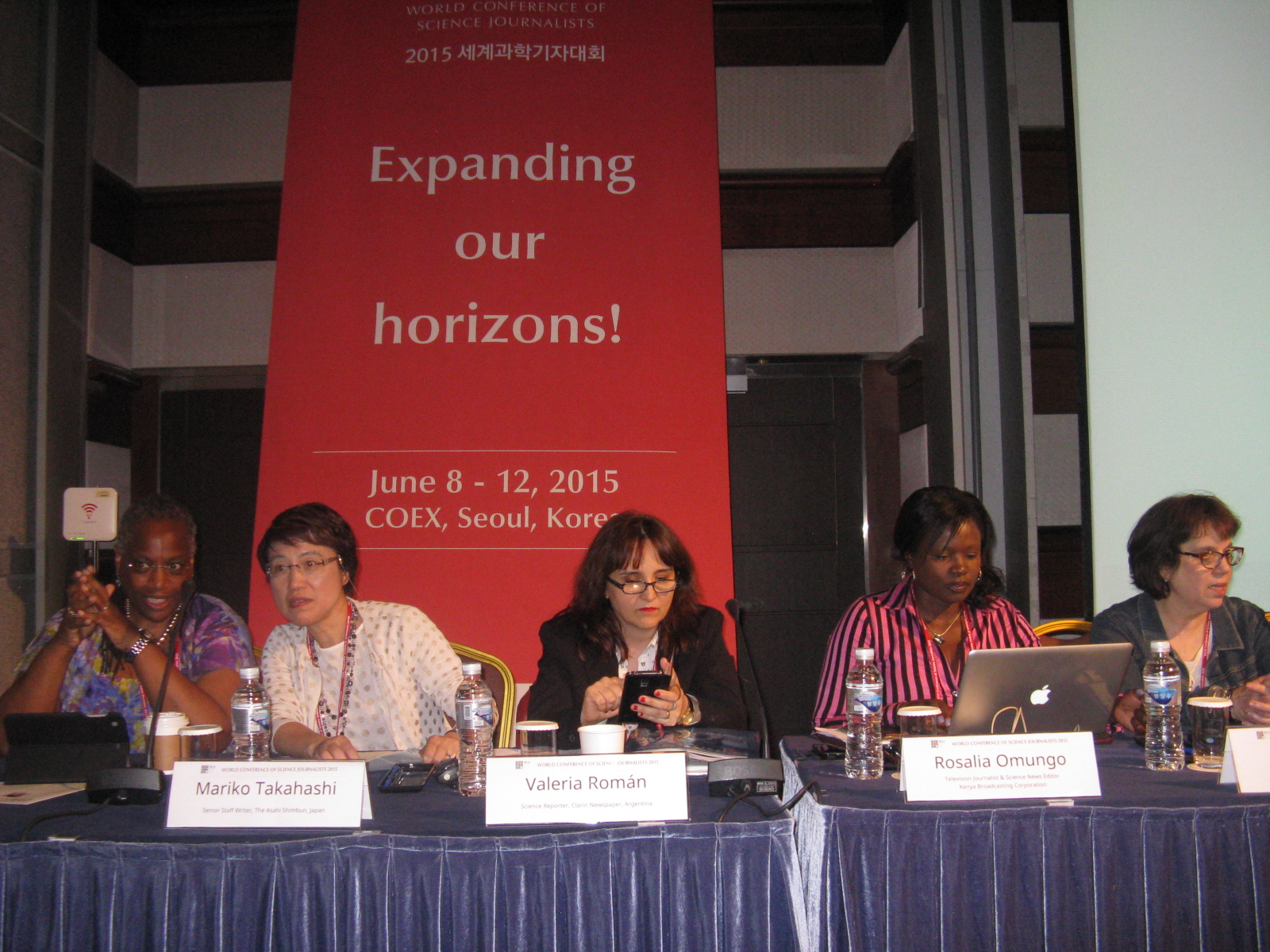
    Communication Panel: Mariko Takahashi (right) and Valeria Roman (next)
    Communication Panel: Mariko Takahashi (right) and Valeria Roman (next) (c) Goede

    As to more and better communication were suggested: webinars and training sessions, innovative communication platforms, regional face to face meetings, in general more inclusion and mutual projects. Valeria Roman, Argentina, had expressed that Latin America could benefit from more Federation activities in her region which automatically would improve communication.

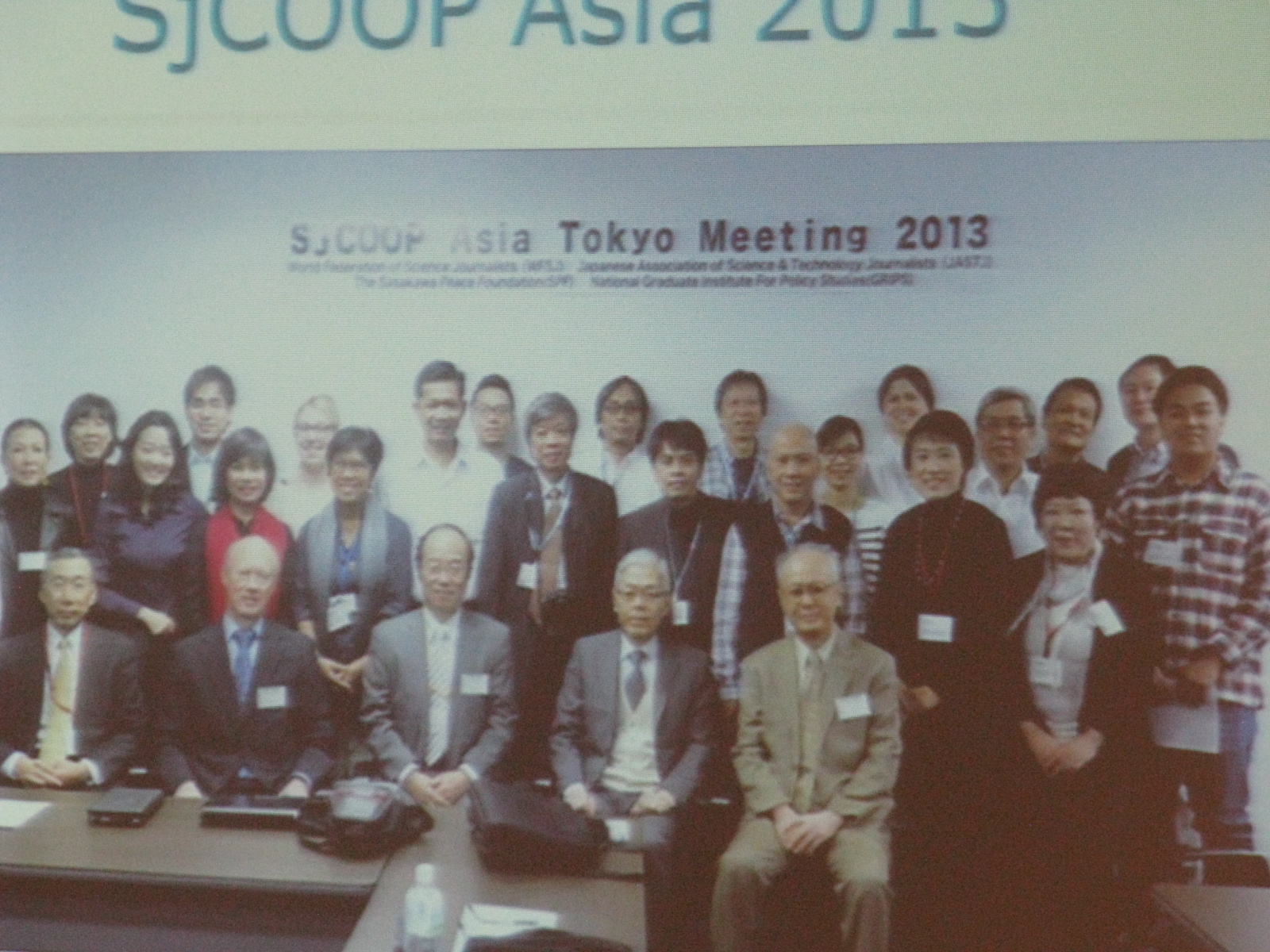
    Before, Mariko Takahashi, Japan, had said that “the engagement in joint projects is important for communication”. Her own association, JASTJ, founded in 1994, benefited a lot from the SjCOOP Asia program, which consolidated already Africa in the Arabic region.

    Science Journalism for famers: Luisa Massarani (c) Goede
    Science Journalism for farmers: Luisa Massarani (c) Goede

    Science Journalism must be engaging

    The 3rd day’s schedule included other sessions which put the profession under the magnifying glass. Luisa Massarani, Brazil, claimed that “science journalism always deals with the society in general and sustainable development in particular”. Journalists needed to supply farmers in the developing world with “reliable sources, informing and engaging them in new techniques”. Which is to say, farmers have to become part of the process.

    But even and especially a high-tech country like Korea, one of the most advanced in the world, needs scrutiny. Cheol-woo Oh, Seoul-based science reporter expressed very clearly that the media way too often just copies press releases and thus “falls into the traps of promotion”.  He criticized that “we depend heavily on scientists and don’t dig deeper”. Quality science journalism in Korea still had a long way to go.

    Shape up: Cheol-woo Oh (right) (c) Goede
    Shape up: Cheol-woo Oh (right) (c) Goede

    D-Day: Copenhagen or San Francisco?

    A separate article will dig deeper into the local scene and describe a visit at the Korea Foundation for the Advancement of Science & Creativity KOVAC. But before, many people are very anxious to find out which city won the bid for the venue WCSJ 2017, Copenhagen or San Francisco. In a couple of hours’ time it will be announced before the WCSJ GA 2015.

    Growing SUSPENSE …

    Traditional dressing (c) Goede
    Traditional dressing (c) Goede

    1 http://time.com/3915617/women-science-tim-hunt-nobel-sexist


    http://www.theguardian.com/science/brain-flapping/2015/jun/10/tim-hunt-old-men-women-controversy-science

    http://www.bbc.com/news/science-environment-33075224

  • First Worldwide Science Debate On Science

    First Worldwide Science Debate On Science

    Debate: more facts needed (c) Goede
    Debate: more facts needed (c) Goede

    Novelty at a world conference of science journalists. Participants debated about scientific issues. How they enjoyed it! High time for another debate: with stakeholders. Because people want more: become co-deciders about science. Could that also help women against sexism, get equal opportunities? Report on the 2nd day of WCSJ 2015 Seoul.

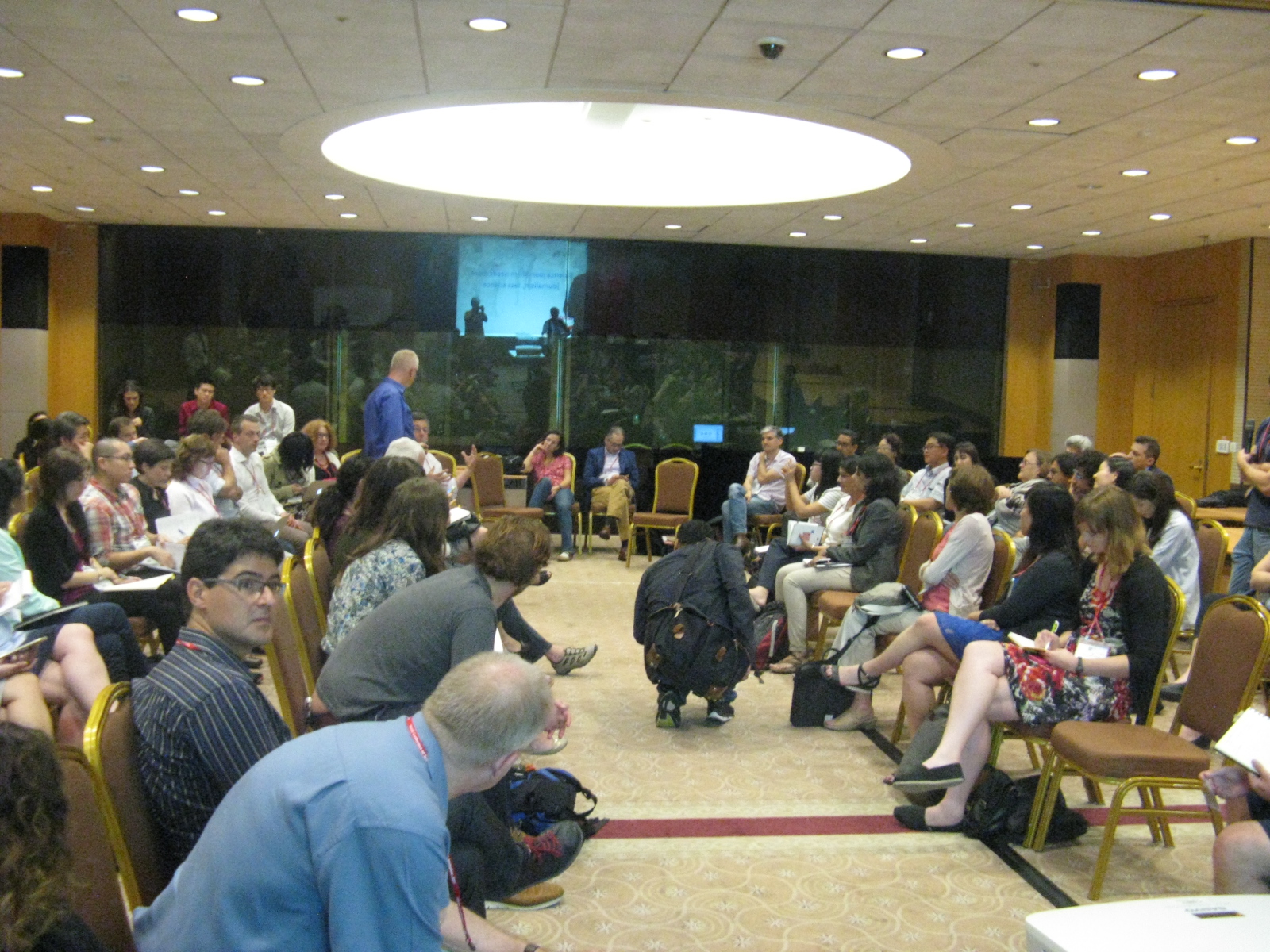
    Talk of the day was a debate about the question: more journalism, less science in science journalism? It was co-produced and moderated by the German science writer Kai Kupferschmidt. The format is an impressive example for more experimental engagements. It broke up the prevailing top-down panel style and brought life and action into the conference, made participants to actors.

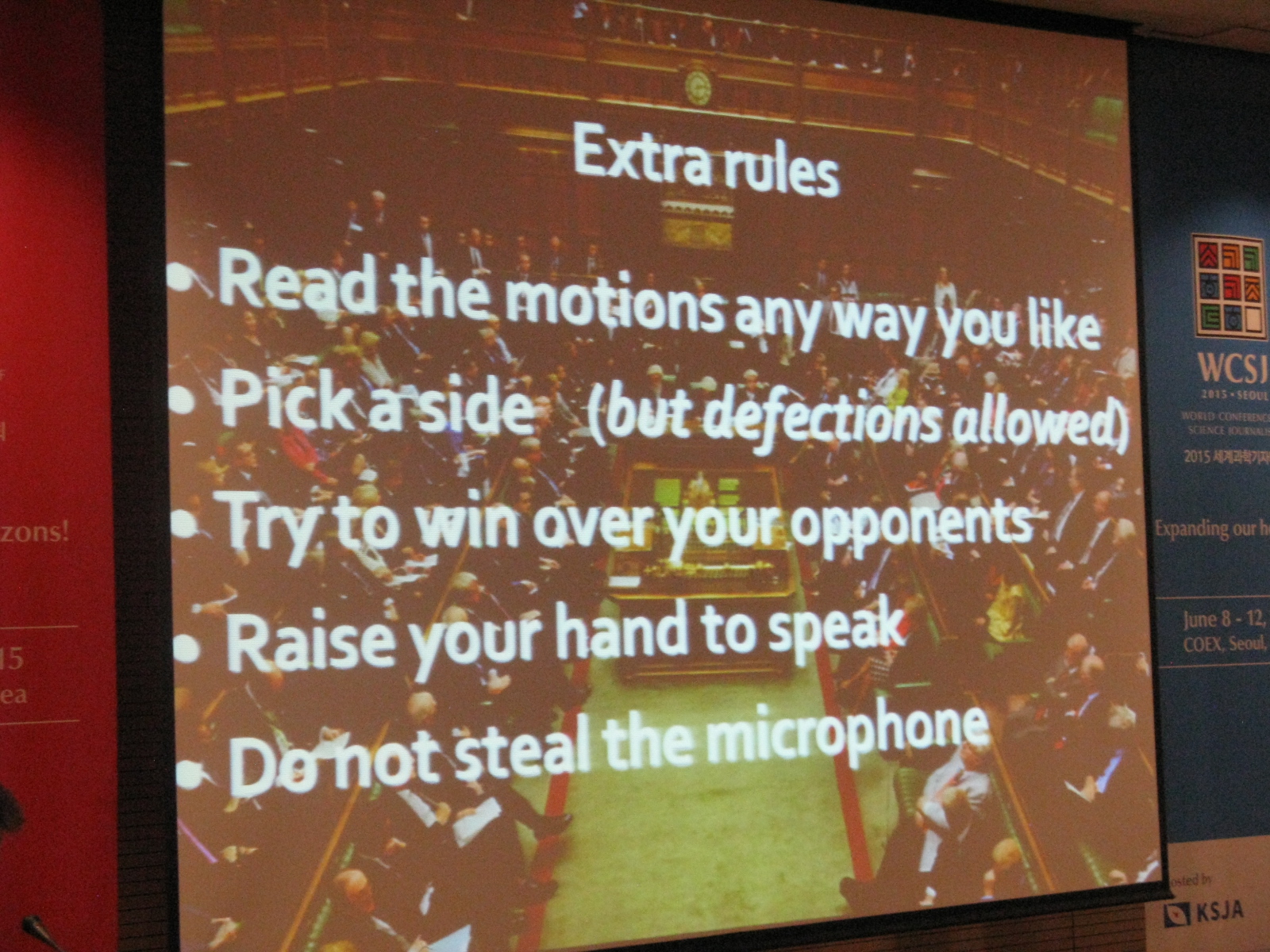
    Rules for the debate (c) Goede
    Rules for the debate (c) Goede

    The format started with two opponents taking the floor. Andrew Jack, Financial Times London, explained that data giants in Silicon Valley had demonstrated how much power and influence over every day life technology had won, without having been effectively questioned by science journalists. Money and power and their impacts on society needed to be checked by journalism.

    Lack of scientific fact: people turn to astrology

    Topics of debate (c) Goede
    Topics of debate (c) Goede

    The French Emilie Martin, Ciel et Espace, countered. First the facts and science, which are increasingly falling short, then the societal context, she said. Then the moderator opened the debate, following the rules of the British House of Representatives. Two fractions, each behind a red line, presenting arguments on a motion, pro and con, and trying to win the other side to vote for their interpretation.

    Federico Kukso, science journalist from Argentina, for example took the pro science stance. “Don’t become blind”, he warned. Because facts remain too meager, Kukso said people don’t get the picture anymore and start to believe in astrology. This has become bestselling  news in his country. In the course of the discussion, some people changed sides.

    1 corridor, 2 groups: pros & cons (c) Goede
    1 corridor, 2 groups: pros & cons (c) Goede

    Do journalists hype infectious deseases?

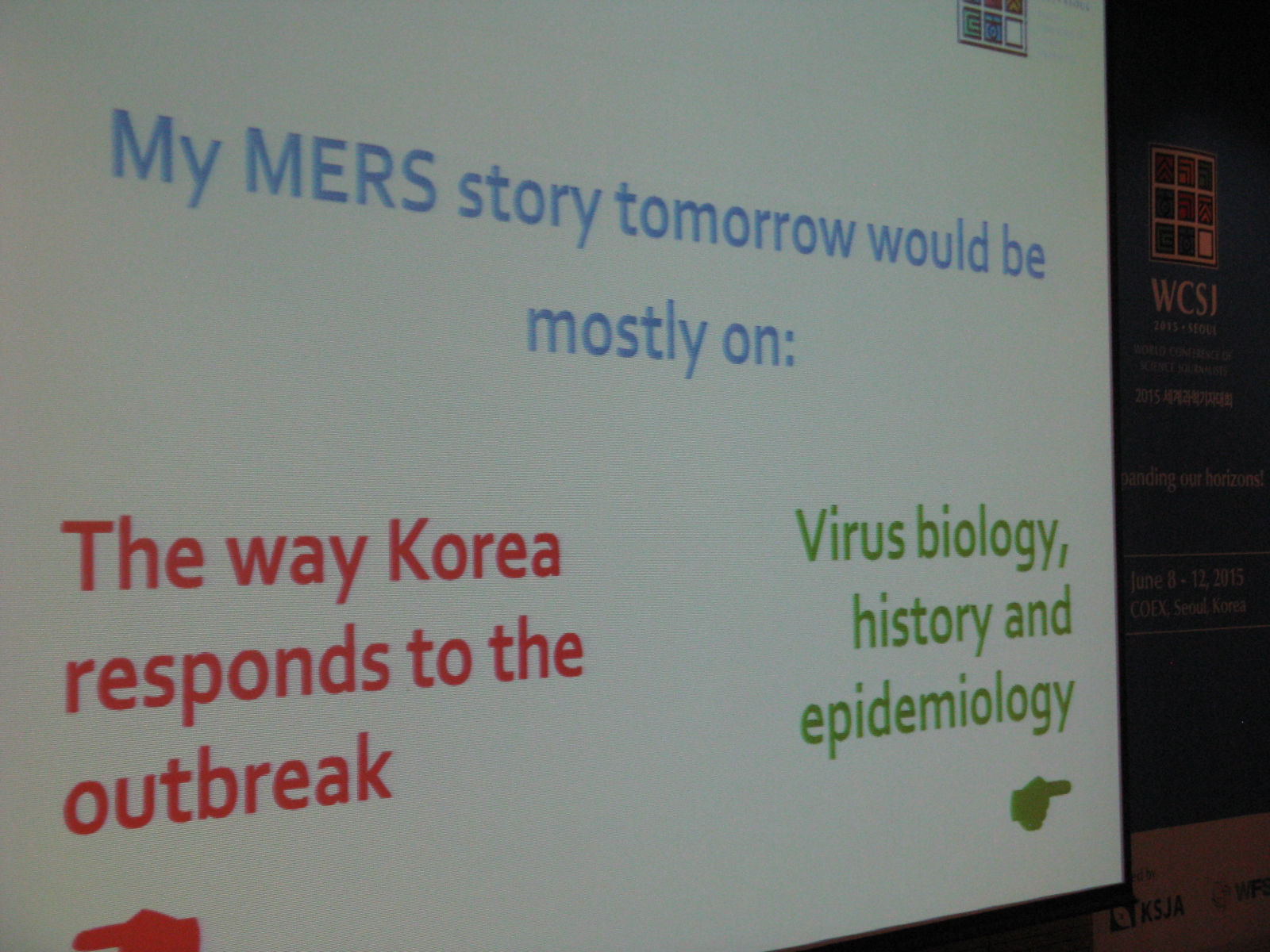
    Other issues were debated such as the new MERS epidemic in Korea. Many people go out into the public only with face masks. Seven people died so far. A press conference in the morning tried to provide more information. Do journalists create a hype and cause insecurity?

    Many issues can be tackled in a playful and educational manner. As to remember: EUSJA led a year ago a debate during ESOF 2014 Copenhagen on nanotechnology. It had pushed further the Seoul concept–no game, but real–involved the stakeholders and closed the debate with a highly recognized resolution1.

    Women’s fight against sexism

    Sexism in science journalism (c) Goede
    Sexism in science journalism (c) Goede

    Surprisingly, may be understandably: The topic sexism, presented in a typical panel style, did not draw too many people. Female discrimination is a well-established fact. Organizer and presenter Deborah Blum explained that the session wanted to provide a global view. Many of the figures are known, yet tend to get forgotten.

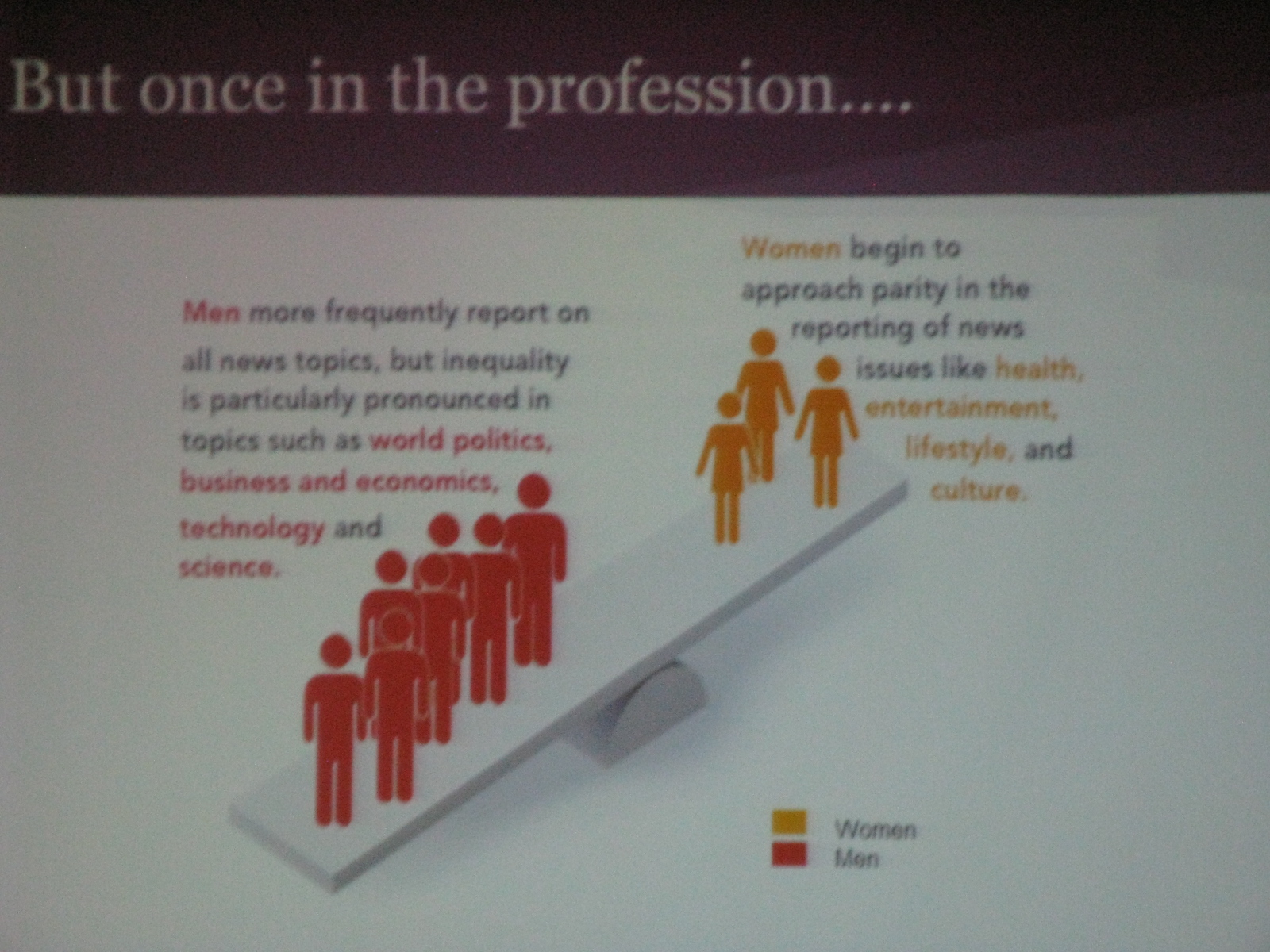
    In the US, 70 percent of women in science journalism are coming up through the regular educational system, however only 35 percent of the media coverage is provided by women. “We don’t want to complain, we want to give you the facts”, explained Deborah. “We would like to be recognized and get more visibility.”

    Domination of men (c) Goede
    Domination of men (c) Goede

    More cooperation, win trust!

    Her co-panelists sustained these findings. Rosalia Omungo, Kenia, proposed as a solution “to cut out a niche and create one’s own passion”.  Valeria Roman, Argentina, drew up for Latin America a slightly better picture, especially in health journalism. Mariko Takahashi, Japan, regretted a large gender gap in her country. It ranks 104 of 142 countries. While in the media on the average 35 percent of the positions are taken by women, in Japan it’s only 15.2 percent, opposed to France with 45.5 percent, for example.

    Younger Japanese vs. old grey men (c) Goede
    Younger Japanese vs. old grey men (c) Goede

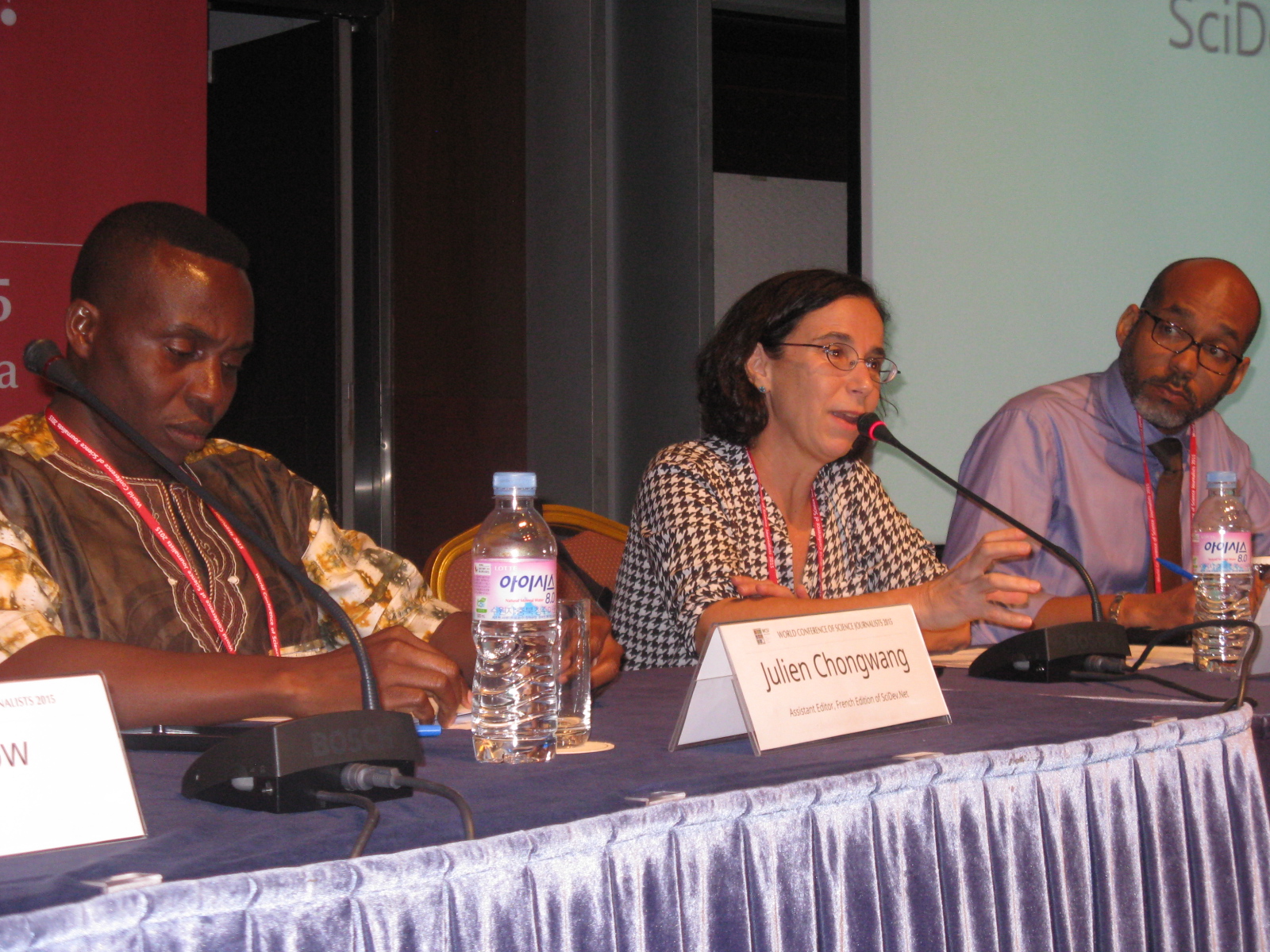
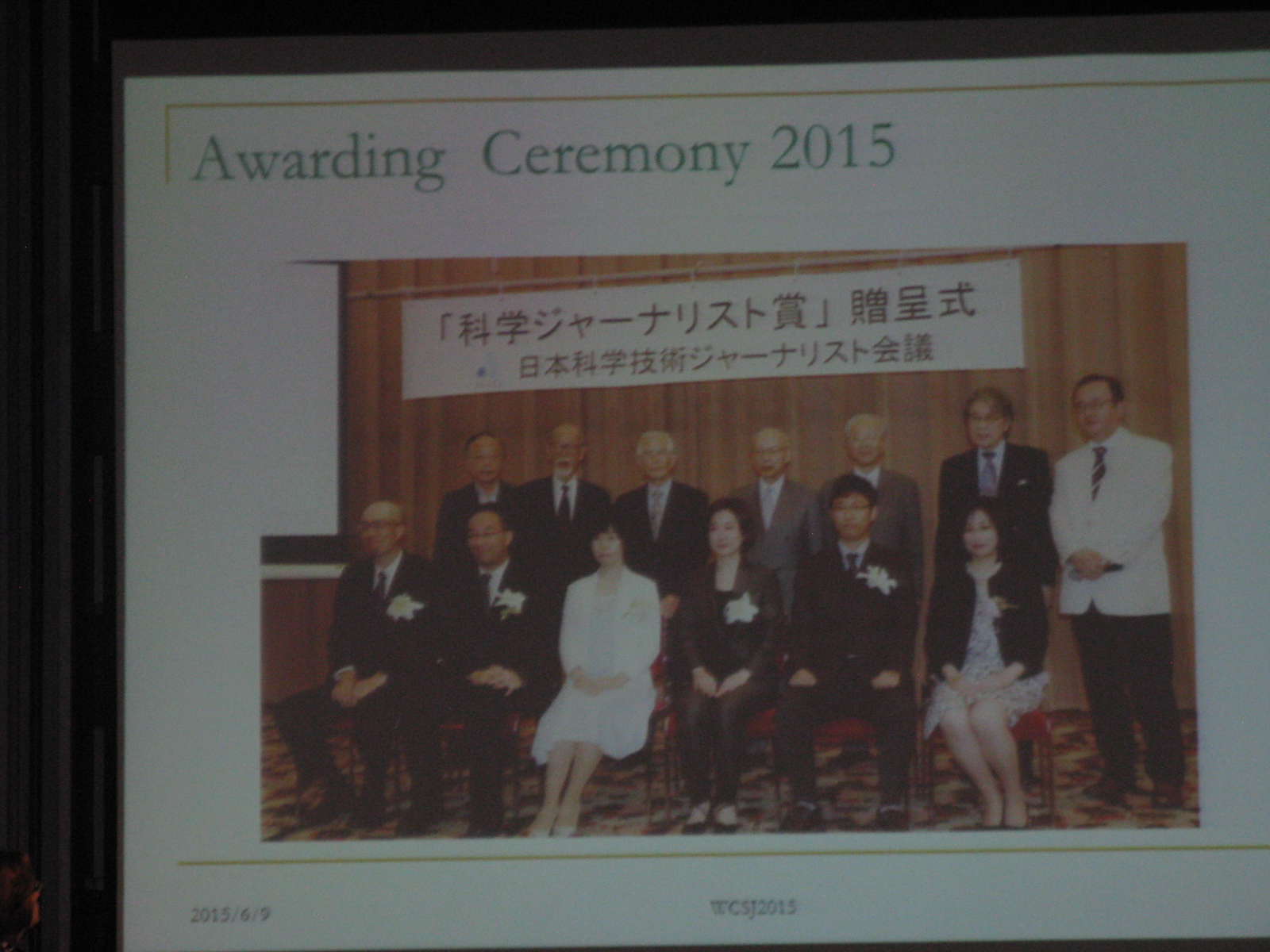
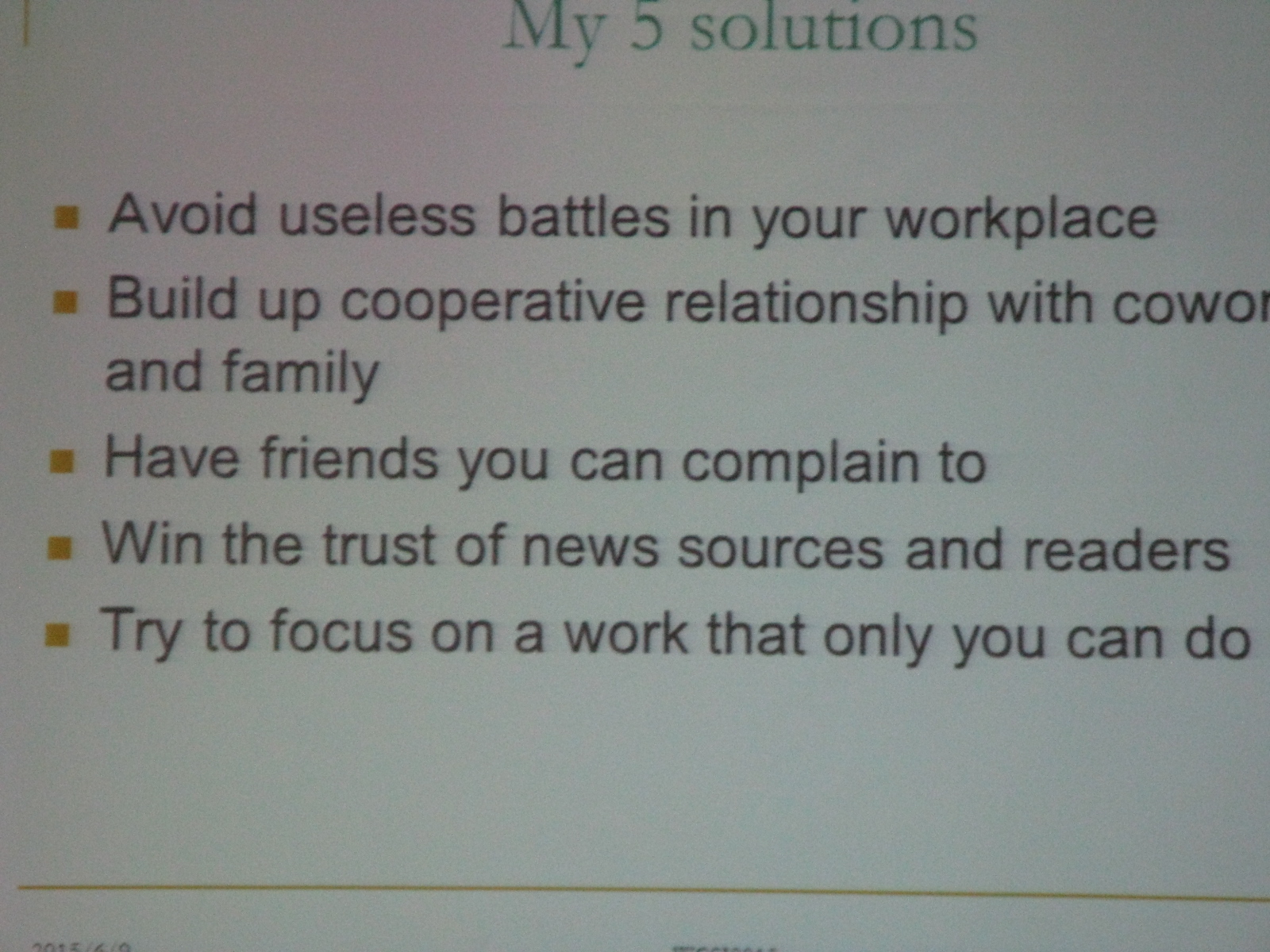
    As to solutions Mariko demanded: avoid useless battles, enter cooperative relations, win trust (see below). Connie St. Louis, UK, added to the catalogue and demanded clear policy against harassment in media outlets and more coverage on violations by women themselves. Also SciDev has developed a guide2, but an overall strategy against sexism in science journalism does not exist so far.

    Rules for women (c) Goede
    Rules for women (c) Goede


    Free citizens, free research

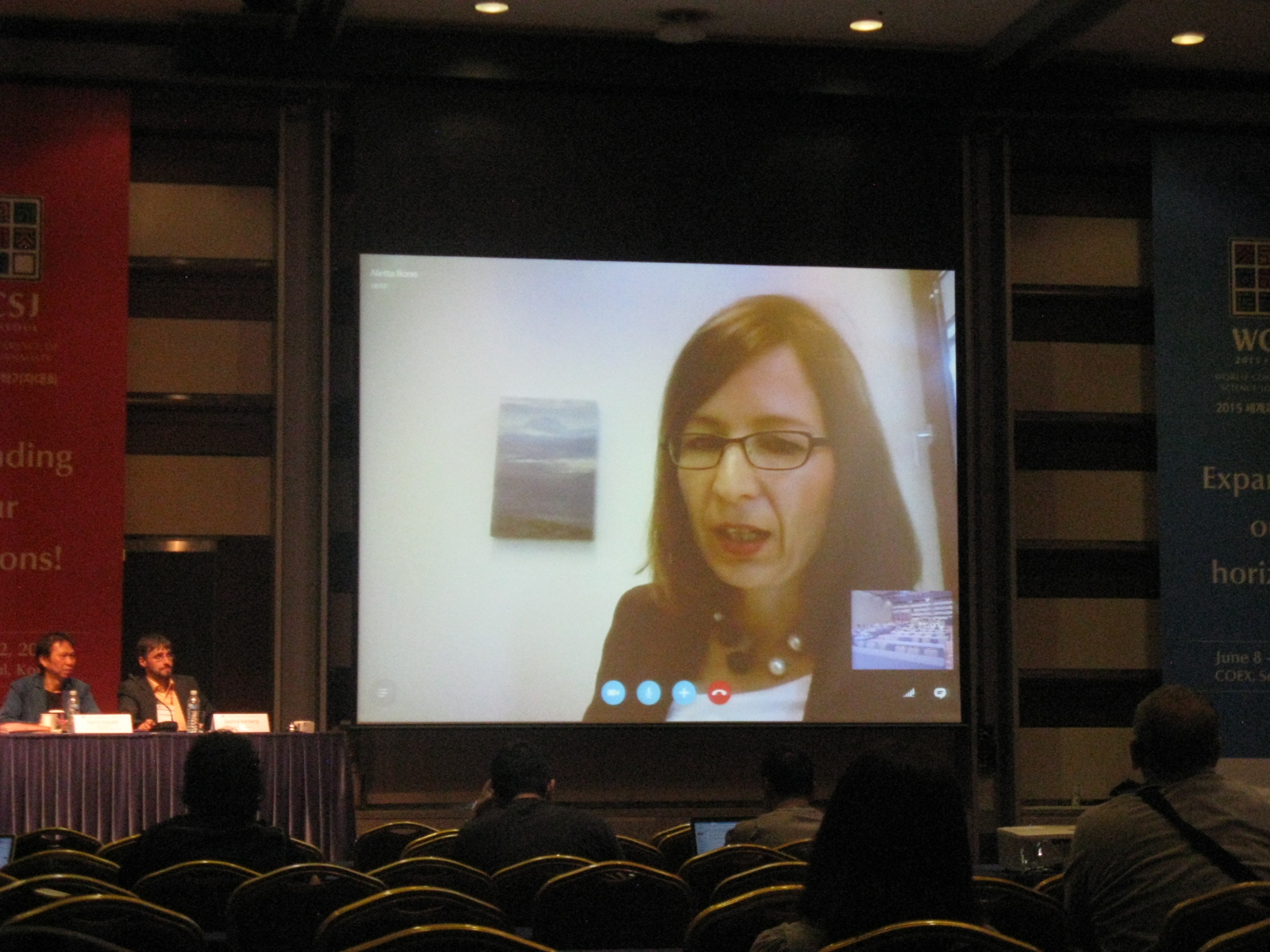
    A clear path of action was defined for another topic which shakes up the ivory towers. The session Citizen Science and Journalism, co-produced by Sascha Karberg, elevates lay people to researchers. When regular people, pursuing their hobbies provide more facts and figures about wild life and rare species they do research work. Aletta Bonn, Helmholtz Center, an outstanding German research institution contributed by skype interesting details. That by 2020 citizens shall become co-designers of research.

    Helmholtz Ctr. advocates co-design (c) Goede
    Helmholtz Ctr. advocates co-design (c) Goede

    Good timing of the session. Coincidentally and in addition, in Berlin and Munich there will be press conferences these days featuring a new book which picks up the the topic and widens the frame. Professor Peter Finke’s “Free Citizens. Free Research” makes taxpayers and consumers to co-deciders.3

    1 https://www.eusja.org/kopenhagen-declaration
    2 http://www.scidev.net/global/gender/practical-guide/gender-science-reporting-women-men.html
    3 http://www.oekom.de/nc/buecher/gesamtprogramm/buch/freie-buerger-freie-forschung.html

    WCSJ 2015 Seoul Programm https://www.wcsj2015.or.kr:447/wcsj2015/main/main.php


  • Green Nuke Power? Arsenic Rice! Fit for seduction?

    Green Nuke Power? Arsenic Rice! Fit for seduction?

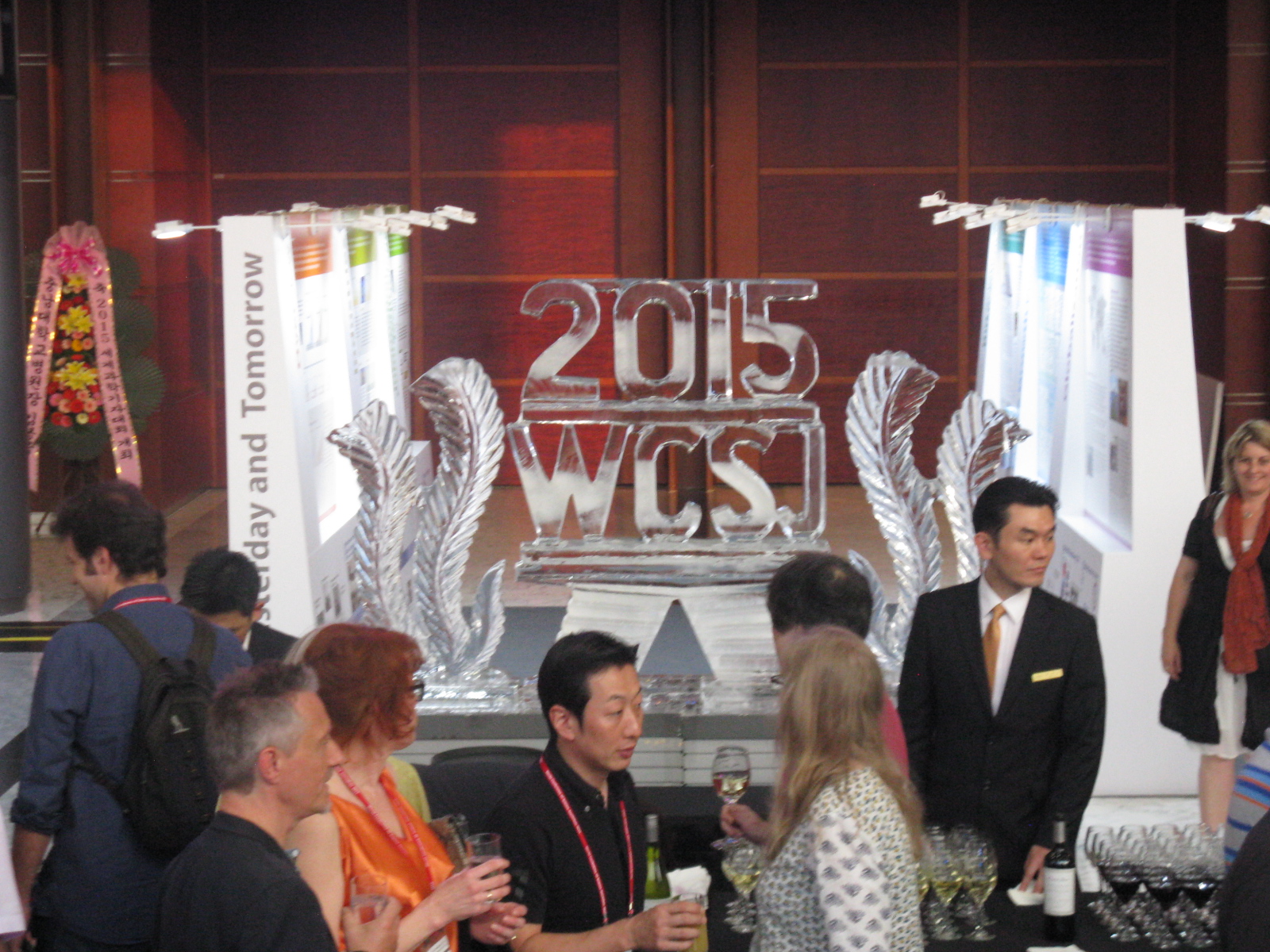
    Opening with an ice sculpture (c) Goede
    Opening with an ice sculpture (c) Goede

    The 9th World Conference of Science Journalists in Seoul has started. Read about 1st day highlights: weird history of arsenic, nuclear power wants to go green, pitch the editors slam, hot contest between Copenhagen and San Francisco to become WCSJ 2017 venue.

    About Bloodless Killing, Pain and Suffering

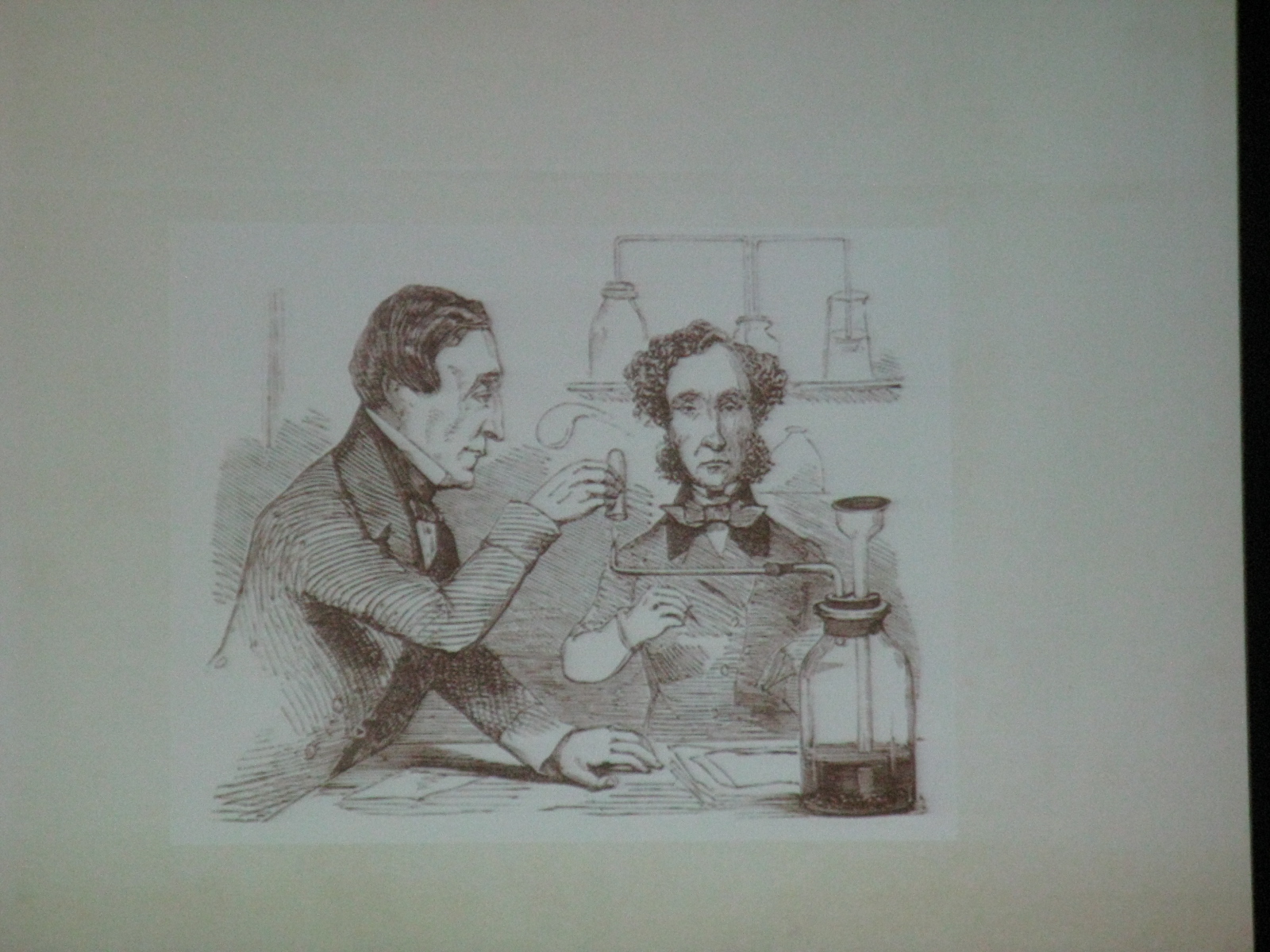
    Some participants in the past grumbled that the world conference had produced no take-home stories. Not this time, folks. In a kick-off lecture, Deborah Blum laid out the intriguing history of arsenic. Who ever knew: That Napoleon’s killer most likely was wall paper, in a beautiful green colour which stemmed from arsenic?  That Mary Ann Cotton killed 21 people with arsenic oat meal. All the trouble researchers went through to track the substance? Its career as a pesticide–and why we have to watch out for arsenic rice?

    Arsenic as a treatment (c)
    Arsenic as a treatment (c) Goede

    In the auditorium next door, a Nobel laureate reasoned about creativity in science. “It is full of pain and suffering” he said, if answers to questions cannot be found. Sounds familiar to sci journos chasing a meaningful story. Deborah presented an invitation full of facts and surprises. Now it’s up to you, dear colleague, to create your own narrative!

    19th Century Dinosaur-Tech

    Green Energy Resource (Goede)
    New Green Energy Source (c) Goede

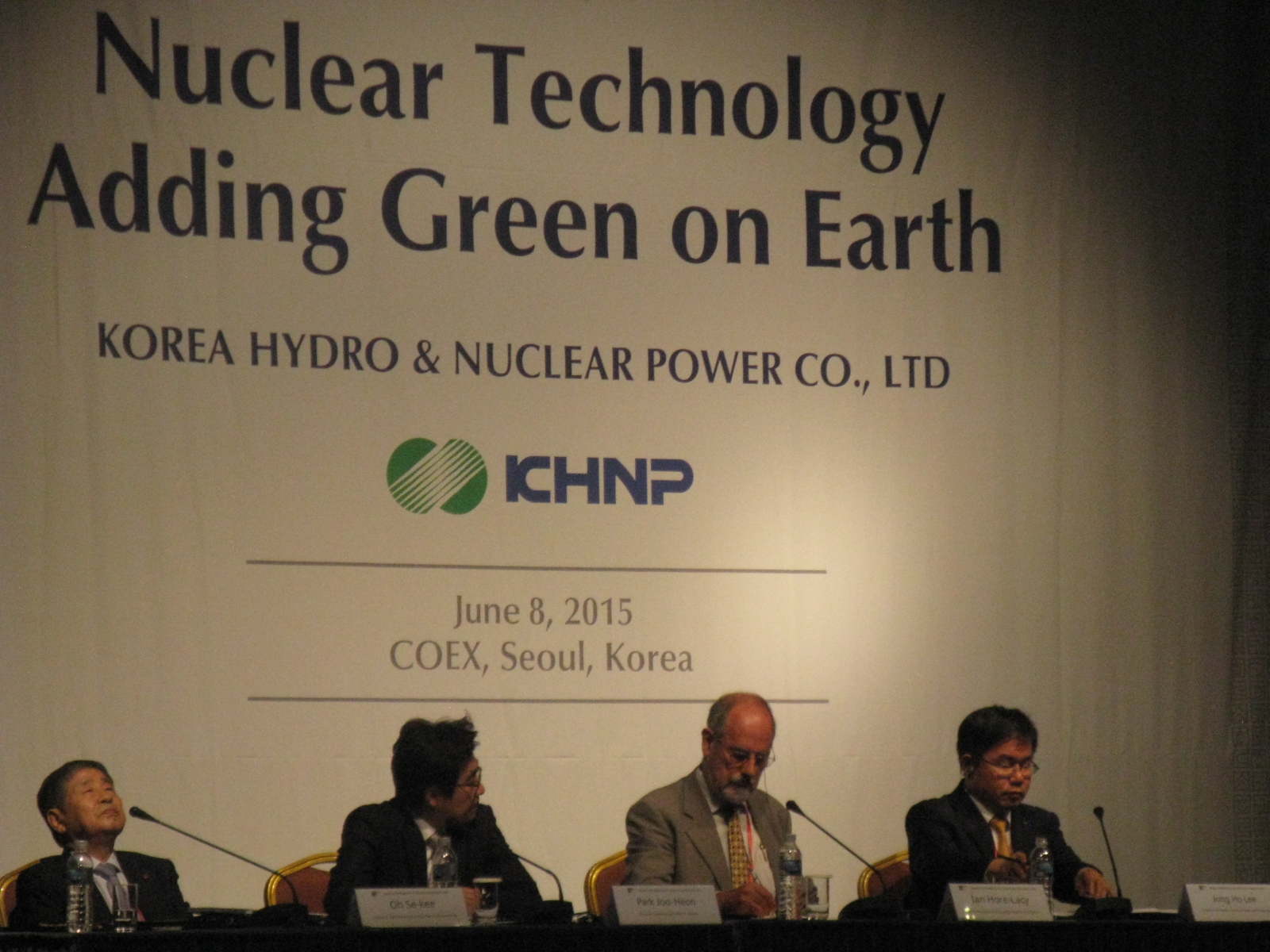
    The session “Nuclear Technology Adding Green on Earth” drew a couple of hundred conference visitors. Ian Hore-Lacy, Senior Research Analyst of the World Nuclear Association, foresaw a renaissance of nuclear power, being the world’s “only carbon free energy resource”. No word however, as my neighbor mumbled about the not resolved waste storage problem. Byung Joo Min, Ph.D. in nuclear physics, member and scientific expert of the Korean National Assembly and moderator of the session raised other questions though. For example that developed nations after they have reached a Gross Domestic Product of 30 000 US $ per person don’t have increasing energy needs.

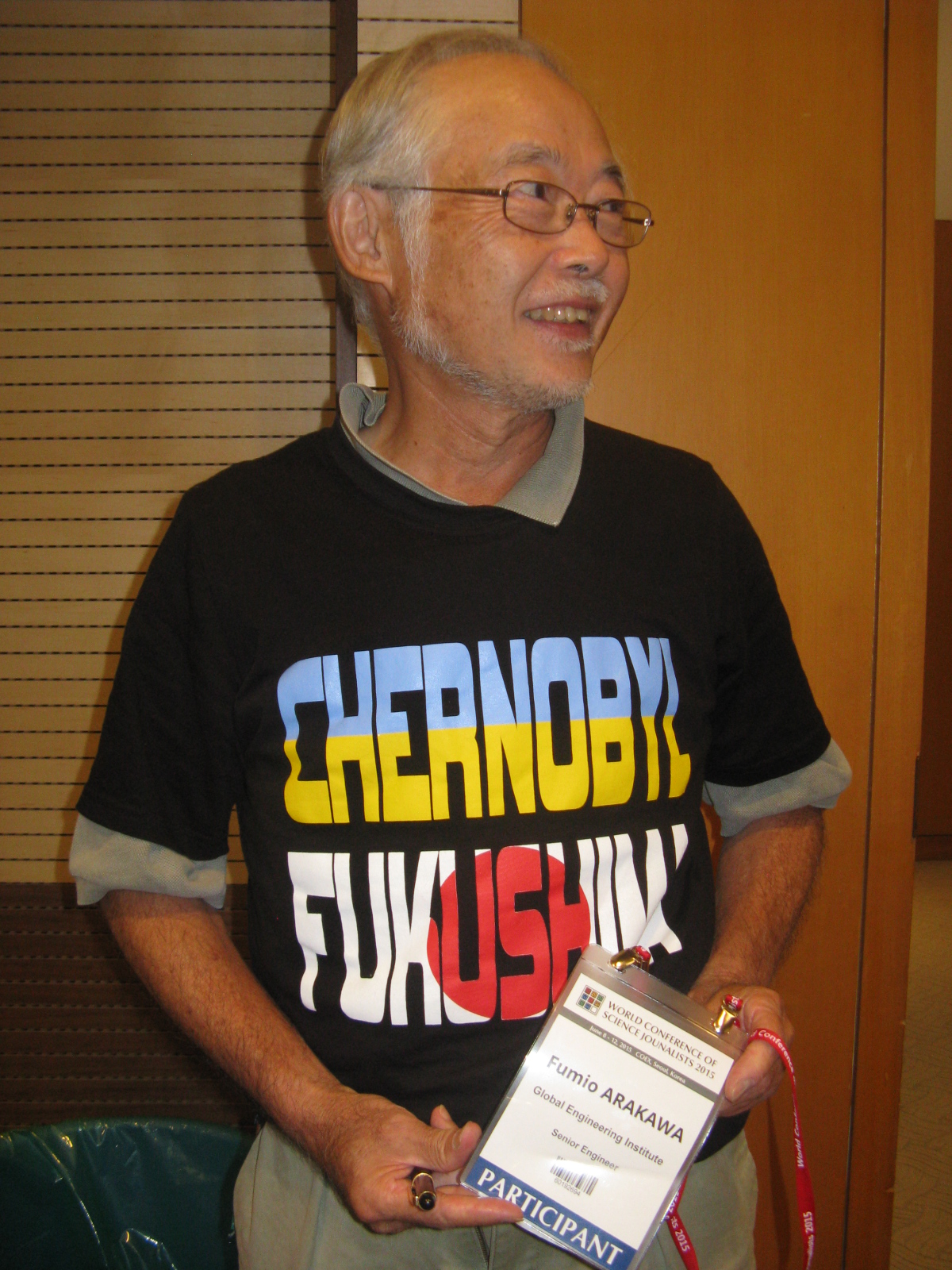
    Chernobyl Fukushima rebel (c) Goede
    Chernobyl Fukushima rebel (c) Goede

    And that the grid and power lines of a central plant are environmentally not outright sustainable. In fact, don’t they remind of the power plant design, dinosaur-type of the 19th century? Nowadays de-centralization is requested. Small is sustainable. The engineer and Fukushima critic Fumio Arakawa, author of the paper “The Future of Success in Nuclear Power Engineering”1, enfant terrible and “Japanese Don Quijote”, as he calls himself put his thumb down.

    Pitch the Editors Slam With Elevator Talks?

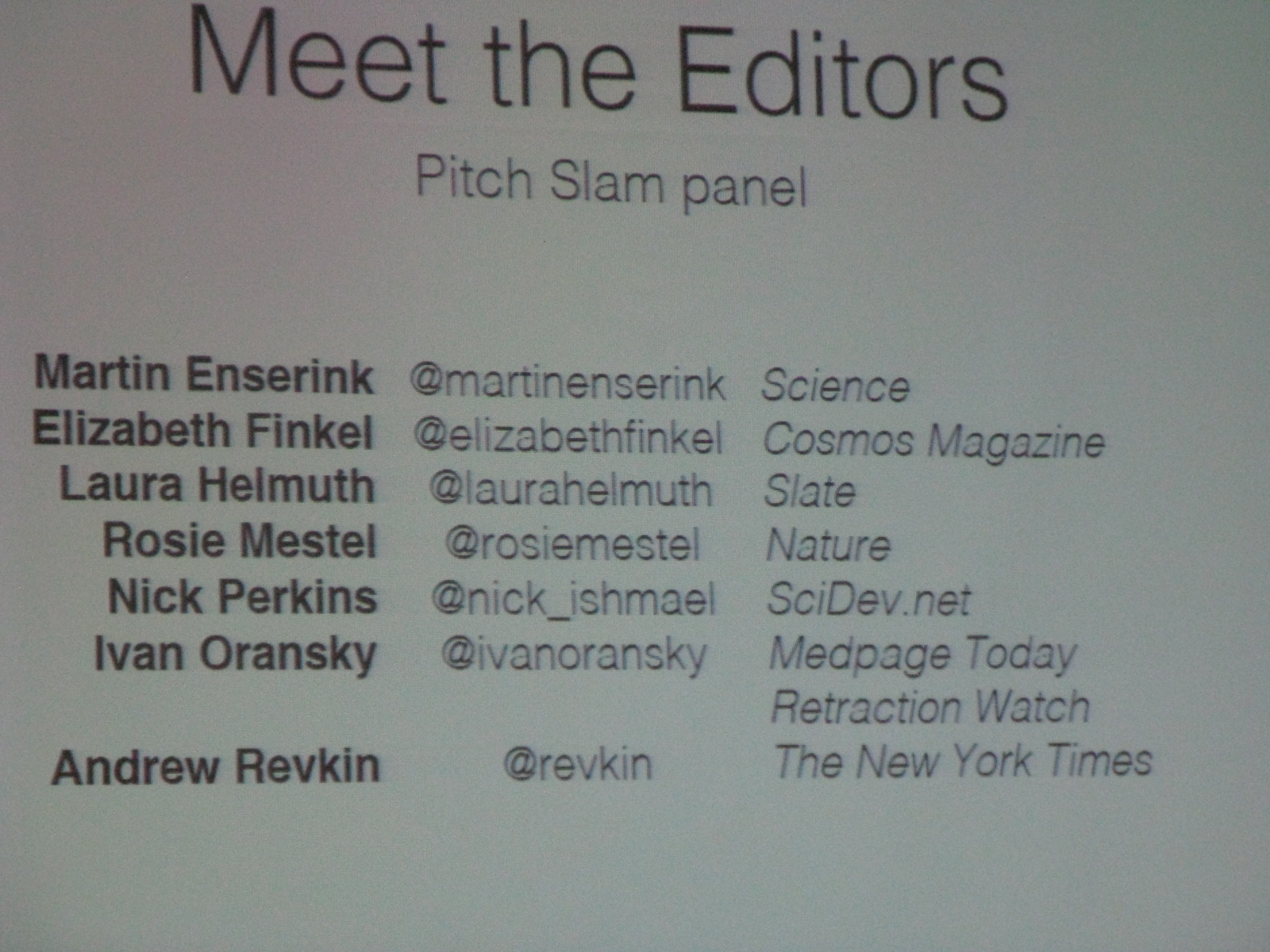
    Prominent names (c) Goede
    Prominent names (c) Goede

    The session “meet the science editors” was the journalistic highlight of the day. The format has been developed by former WFSJ Executive Director Jean-Marc Fleury. Young journalists presented abstracts of prospective stories to a panel of editors of outstanding journals. Whether wild life conservation in Africa, how obese poor people live up to better nutrition standards or by which means a disaster area after an earthquake reinvents itself, many answers raised the same questions: Where is the science, who are the people involved, how to spice up the story and create more tension,  in other words: Where is the meat, young colleague?

    Surprise: Also publications like “Nature” are looking nowadays for stories which can be “intellectual food for the dinner table”! As a rule for all media, pitches need to be short and precise, six to eight short paragraphs, they must grab the editor in the very first sentence, and as the New York Times blogging editor remarked: “Why not add a suitable youtube video?”

    WE LEARNED! Also and especially editors want and need to be seduced, just like any reader or media user.

    "Where is the meat?" (c) Goede
    “Where is the meat?” (c) Goede

    Fun Exercise for EUSJA Study Trips?

    Notable: Many written abstracts lacked headlines, paragraphs, rhythm and flow, did not pin down the who, what, how, why, left open the spin of the story. Comment of one of the session visitors: “A slam must be more exciting, so why not ask the pitchers for an improvised elevator speech in 30 seconds?” Additional food for thought and brain neurons: Why not include pitch the editors exercises in EUSJA study trips, perhaps after the tour at a night-time drink at the hotel. Would be fun, could help participants to sell their stories in the aftermath and quintessentially: More useful than karaoke!

    COPENHAGEN: Innovative media concept & visions

    Copenhagen pitch (c) Goede
    Copenhagen 2017 pitch (c) Goede

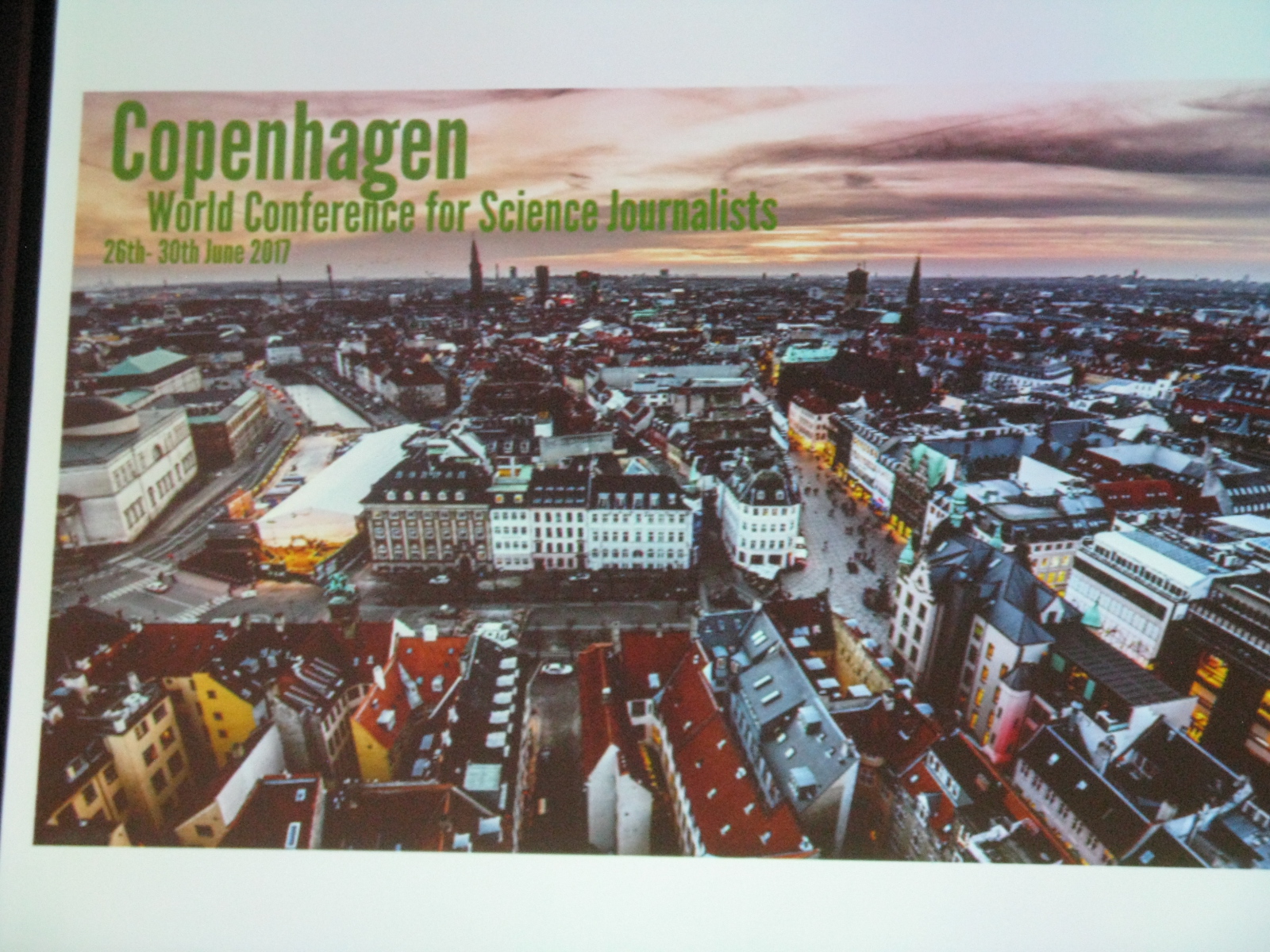
    And now the battle of the day, the bidding for the 2017 world conference venue2. Two parties entered the contest which will be decided by Thursday with the results made public at the General Assembly with the member organizations and delegates. The Danish started with a presentation of Copenhagen’s ambassador in Seoul who introduced his country as one of the world’s most innovative, also in science and technology. The Danish delegation promised a top-class event at the Danish Broadcast Concert Hall, amidst Scandinavian life style and nature, with a new media forum which would broadcast directly from the conference.

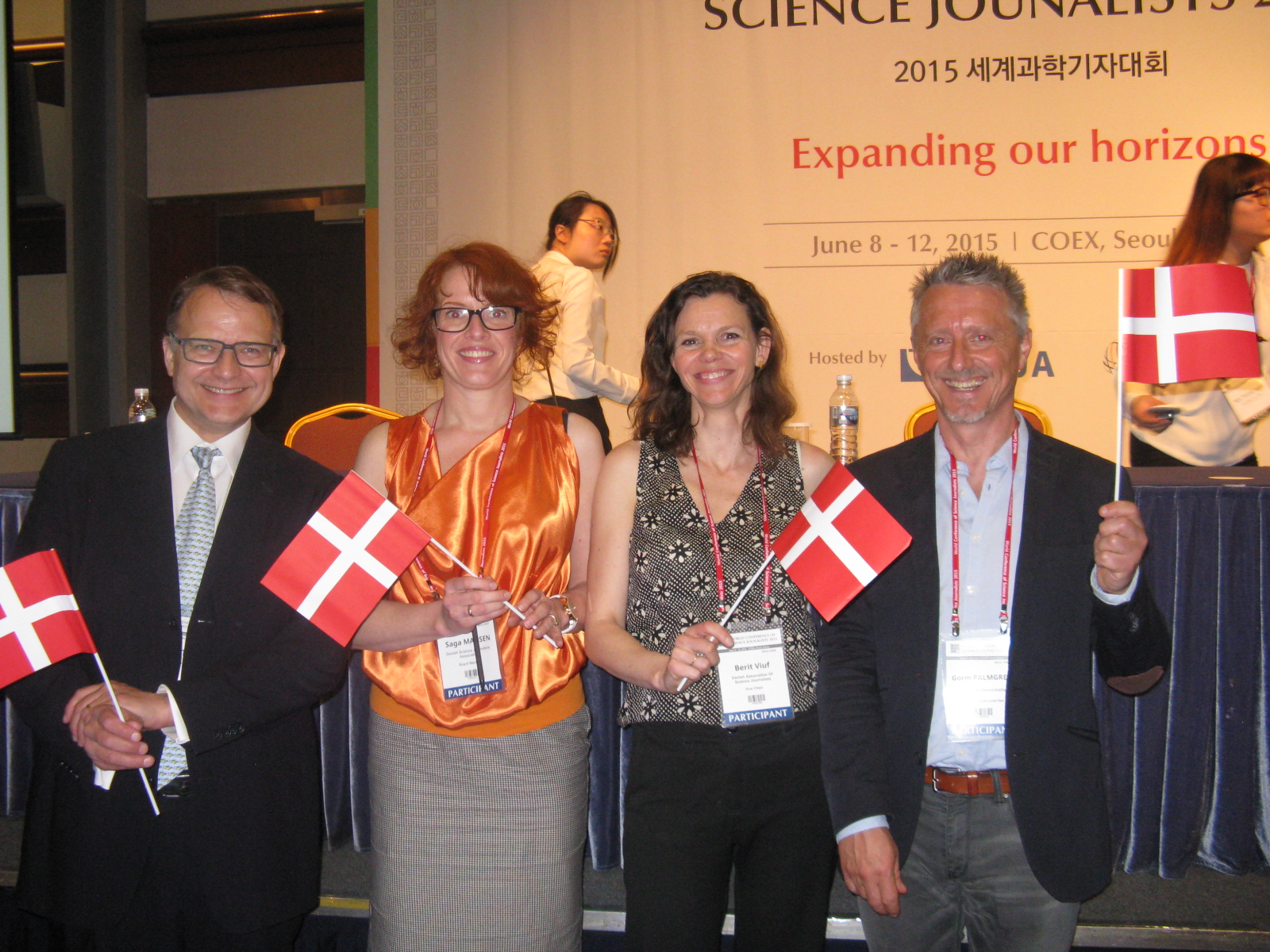
    Danish Delegation with flags (c) Goede
    Danish Delegation with flags (c) Goede

    As the leader of the delegation, Jens Degett outlined: major sponsors of ESOF, Europe’s largest science conference, stood behind the proposal. With a substantial contribution of the European Commission 1.2 million Euros could be expected for the budget, with surpluses flowing into the World Federation treasury. Jens and his colleagues are shooting for a “visionary working conference”, which also would address the crisis in science journalism and possible solutions.

    SAN FRANCISCO: 1200 people target

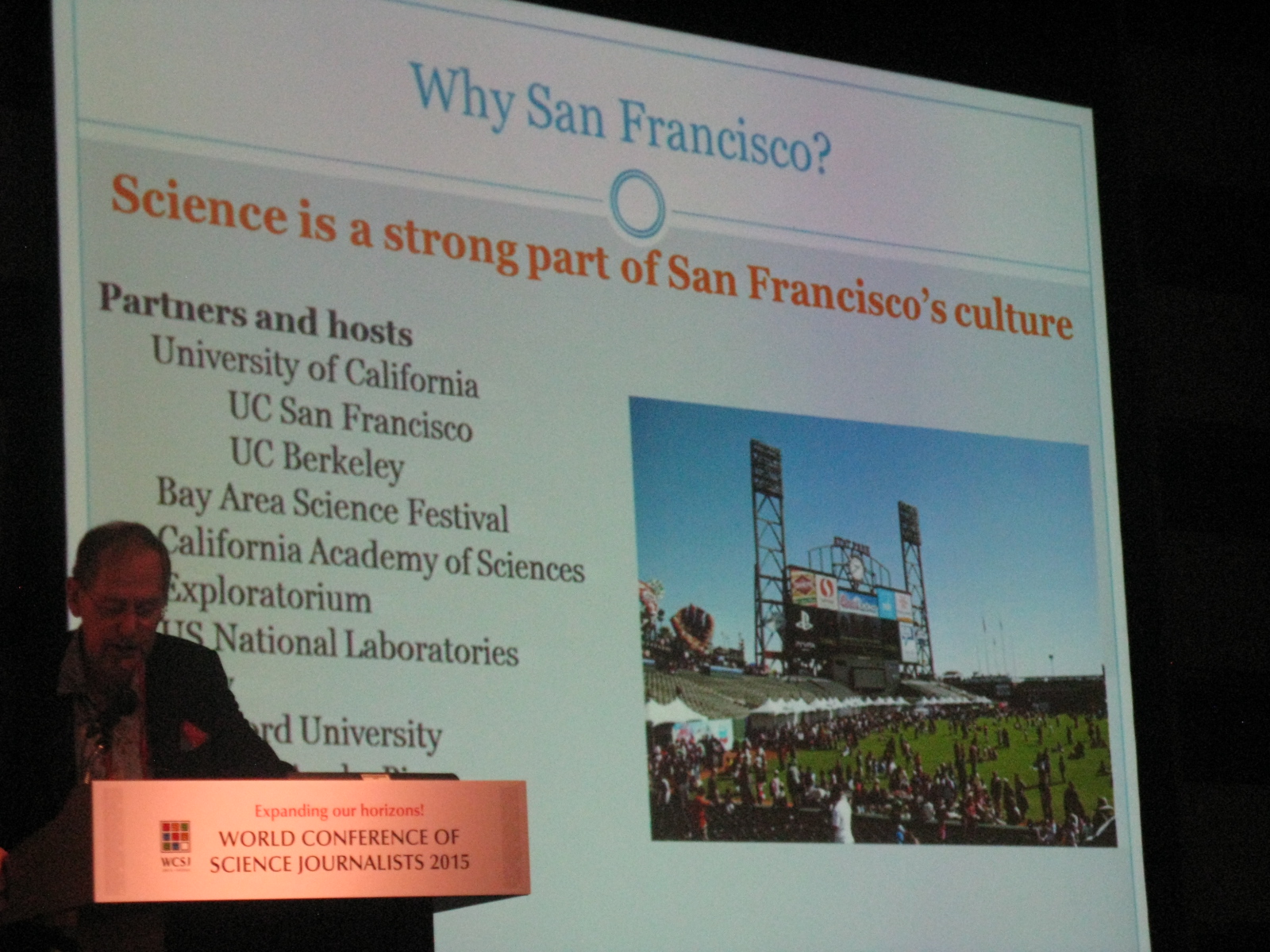
    San Francisco pitch (c) Goede
    San Francisco 2017 pitch (c) Goede

    Highly convincing also the US American delegation, led by Ron Winslow. Powerful: The event would be organized by a continental coalition including Canadian and Latin American science journalists’ associations which had signed supporting papers. Only the fact that CASW and NASW were having their annual meetings in San Francisco would produce a couple of hundred attendees. Altogether California’s Bay Area could draw even more people than the London world conference, may be 1200 persons. The delegation pointed out the proximity of a number of renowned universities, research facilities as well as Silicon Valley. On the other side, independent and critical science journalism would be promoted. A budget of about one million US dollars would be raised.

    US American delegation with scarfs (c) Goede
    US American delegation with scarfs (c) Goede

    Questions of the audience revolved around tough US immigration laws for Arabic visitors, for the Northamericans and the Danish alike how to attract new faces and fresh blood.

    Please stay tuned for WCSJ 2015 Korea further reports and next event’s venue!

    WCSJ 2015 Seoul Program
    http://www.wcsj2015.or.kr/wcsj2015/program/program.php
    1 https://www.eusja.org/europes-energy-future-flaws-hopes-challenges-in-science-journalism/
    2 http://www.wfsj.org/news/news.php?id=467