Tag: WCSJ 2015 Seoul

  • Last and First Dance

    Last and First Dance

    The winners (c) Goede
    The winners (c) Goede

    Day 4 and end of WCSJ 2015 Seoul. Last sessions with dwindling attendance, while the General Assembly of the World Federation got under way. Final act: The closing ceremony with a little Oscar taste and the announcement of the WCSJ 2017 venue, hot contest between Europe and the US.

    The GA was off to a good start: More than 50 percent of the member organization attended the  annual meeting at the COEX convention center near Hangang river. Federation executive director Damien Chalaud presented achievements during the past two years:
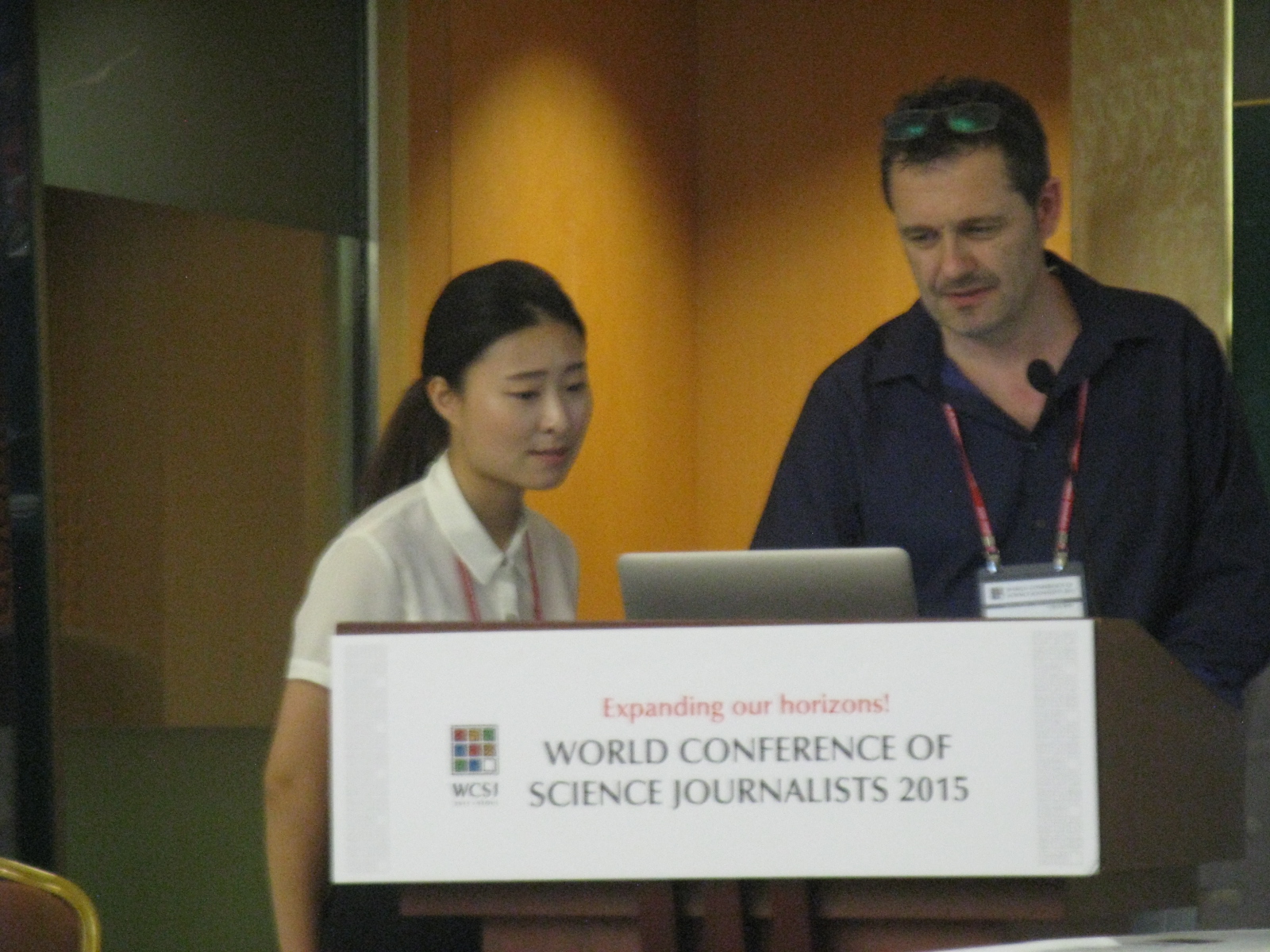
    World Federation Executive Director (c) Goede
    World Federation Executive Director (c) Goede

    +++ 51 member organizations representing 9000 science journalists+++15 new national associations acquired+++45 mentors taught+++ 140 journalists trained in 50 countries+++3 online courses on Science Journalism, Ebola, Viral Hepatitis+++8 global conferences organized

    “Respect each other!”

    The challenge according to Damien: to further diversify the projects with more training units adapted to many different regions and local requirements. The training program SjCOOP, a long-term approach which had been very successfully applied to the needs of Africa and Arabic countries, in the final round implemented in Southeast Asia, will be phased out sooner or later. Charity organizations in Canada will be targeted as new funding sources.
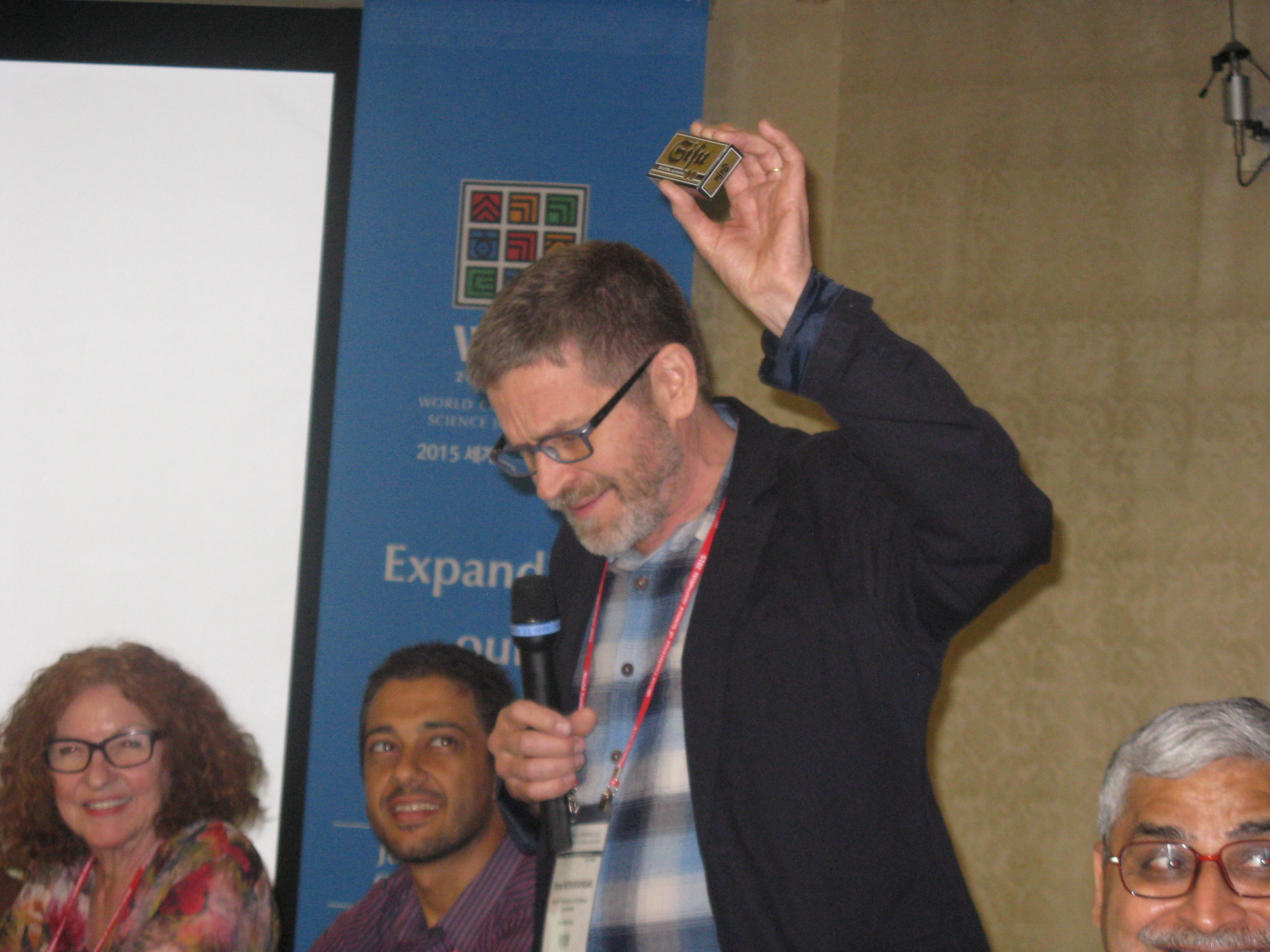
    Salmiak for the incoming board members (c) Goede
    Outgoing: Kathryn O’Hara (left), Vesa Niinikangas (center), Pallava Bagla (right)  (c) Goede

    Vesa Niinikangas, past president and outgoing board member, “happily passed on the burden to three incoming board members”, as he jokingly remarked. Then he became serious. His advice:

    +++Respect each other and listen to each other+++Read immediately the bylaws and mission statement and repeat this exercise periodically+++Pay attention to RELEVANT details+++Express you opinion, but don’t keep talking all the time+++You are the directors and decision makers+++In the public sphere you ALWAYS speak with 1 voice+++You turn to change the world, but have a history to be proud of

    “Make people unhappy!”

    Vesa gave away Finnish chewing gum to the outgoing officer. The incoming received Finnish salmiac pills, “very bitter ones”, as he stressed with his northern humour.
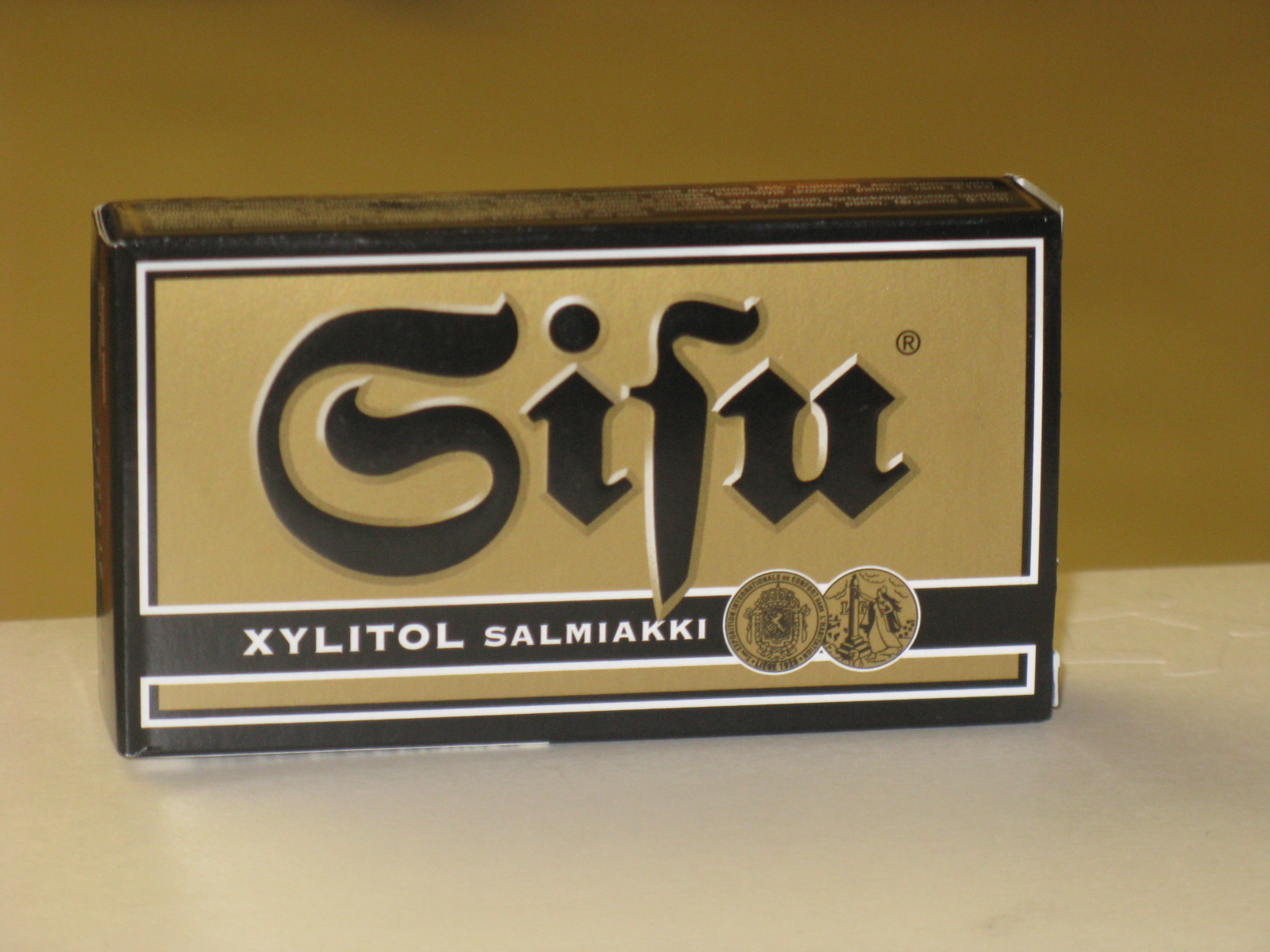
    Bitter pills for successors (c) Goede
    Bitter pills for successors (c) Goede

    A different tack took Pallava Bagla, who had “brought the flavours of India” into the board, as he said and added, smilingly: “I look back at a four year rollercoaster ride.” His piece of advice. Journalists are not to make people happy, but unhappy. “If everybody is unhappy, you are ready to enter nirvana”, Pallava expects. The discussion about better communication, more transparency, and the journalistic designation should be kept in the loop. “If you don’t know it, whom else do you expect to find answers?”
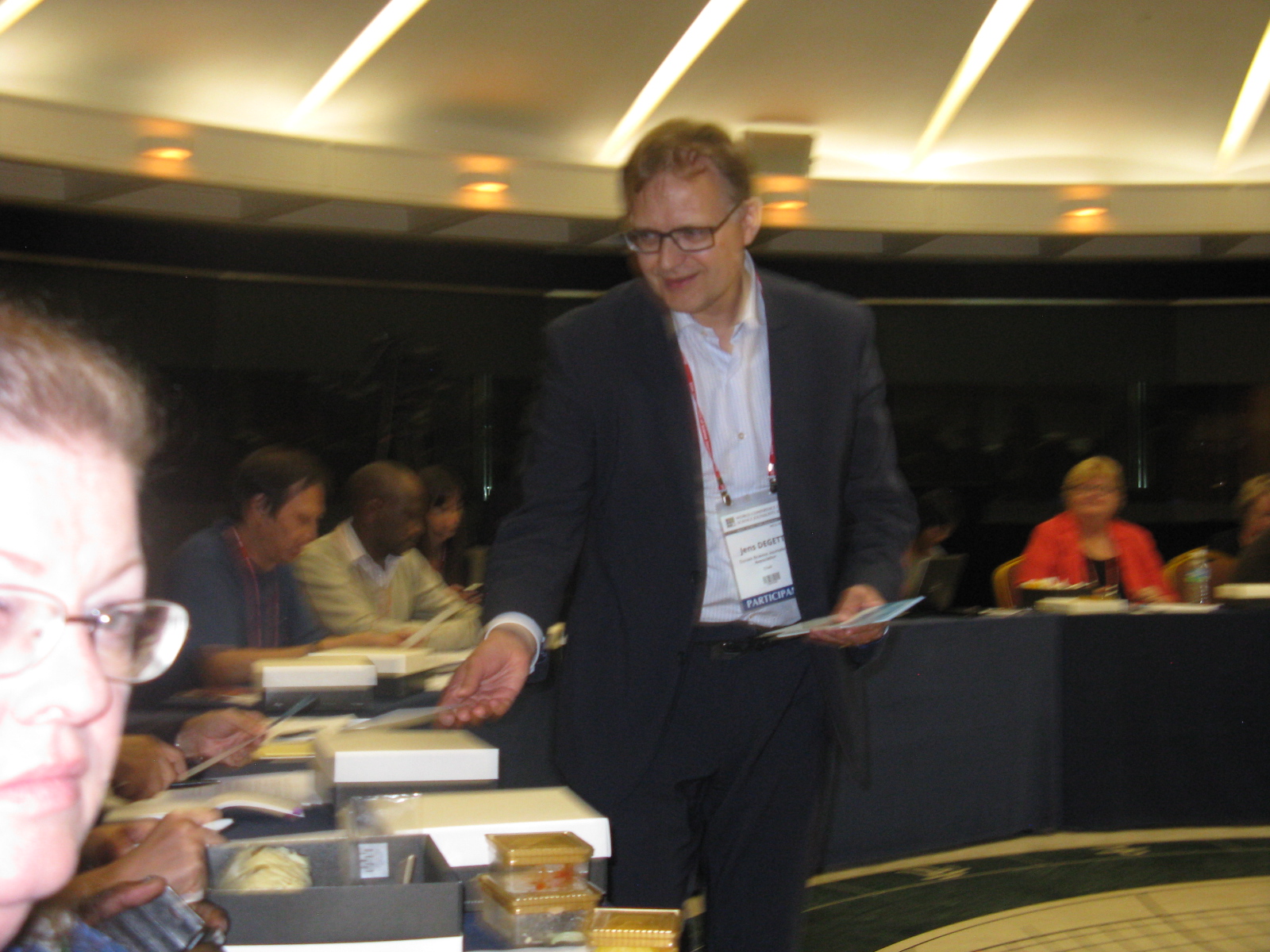
    Jens Degett announces European Conference (c) Goede
    Jens Degett announces European Conference (c) Goede

    At the end, Jens Degett, the Danish delegate and organizer of the 2nd European Conference of Science Journalists in November in Budapest, announced the event and passed out invitations.001
    “If you are going to San Francisco …”

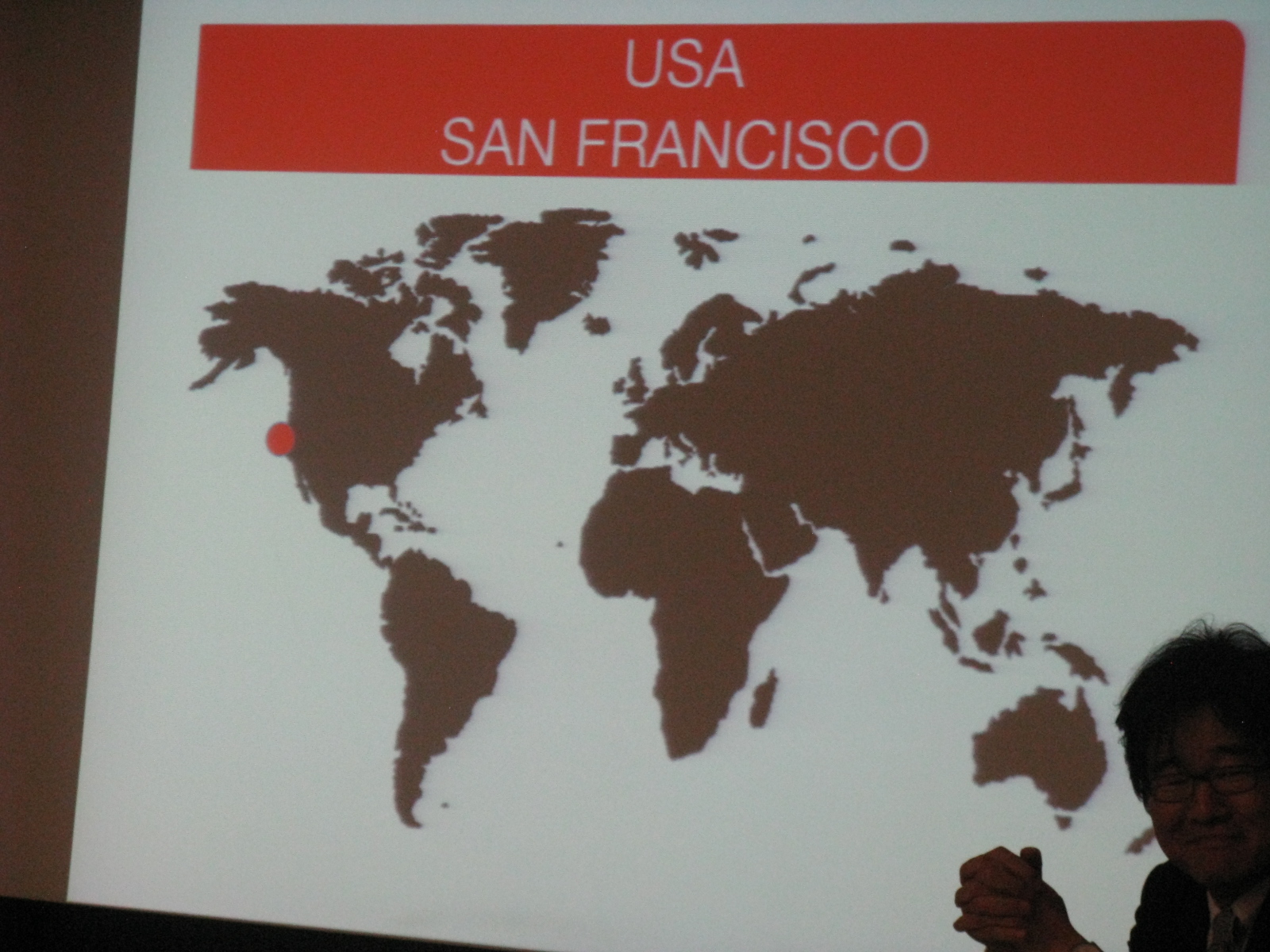
    In the closing ceremony, the winners of the contest took the floor. Ron Winslow and Cristine Russell, former presidents of the National Association of Science Writers NASW went on stage. The next world conference will be held in San Francisco. For 2017 they promised a powerful scientific and  journalistic program.
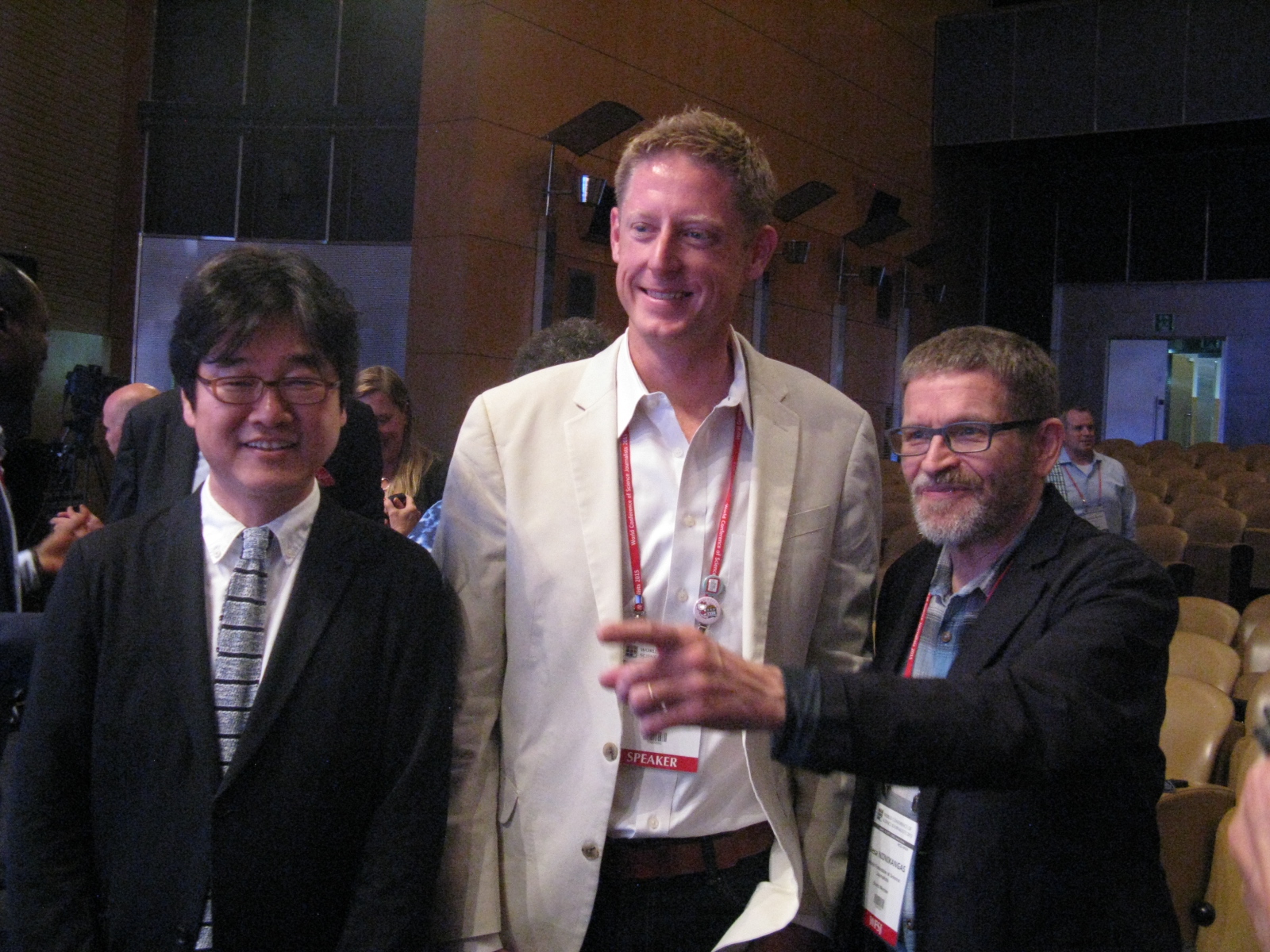
    Presidents: incoming Curtis Brainard (center), outgoing Dr. Chul Joong Kim (left), past Vesa Niininkangas (right) (c) Goede
    Presidents: incoming Curtis Brainard (center), outgoing Dr. Chul Joong Kim (left), past Vesa Niininkangas (right) (c) Goede

    The speakers honored that Copenhagen had submitted a strong proposal and with both cities in the contest science journalism had won. The Bay Area offered the chance to reach out to the South and include Latin America.  Scott McKenzie’s famous “If you’re going to San Francisco you should wear some flowers in your hair” was played and the US American delegation started to dance.

    “Narrow the gap of conflict!”

    After the new president of the World Federation, Curtis Brainard, had introduced himself, the organizers and hosts of the Seoul conference said good-bye, Dr. Chul Joong Kim and Shim Jae-oek. Shim found very kind words, as warm as the hospitality visitors had found in Korea’s capital.
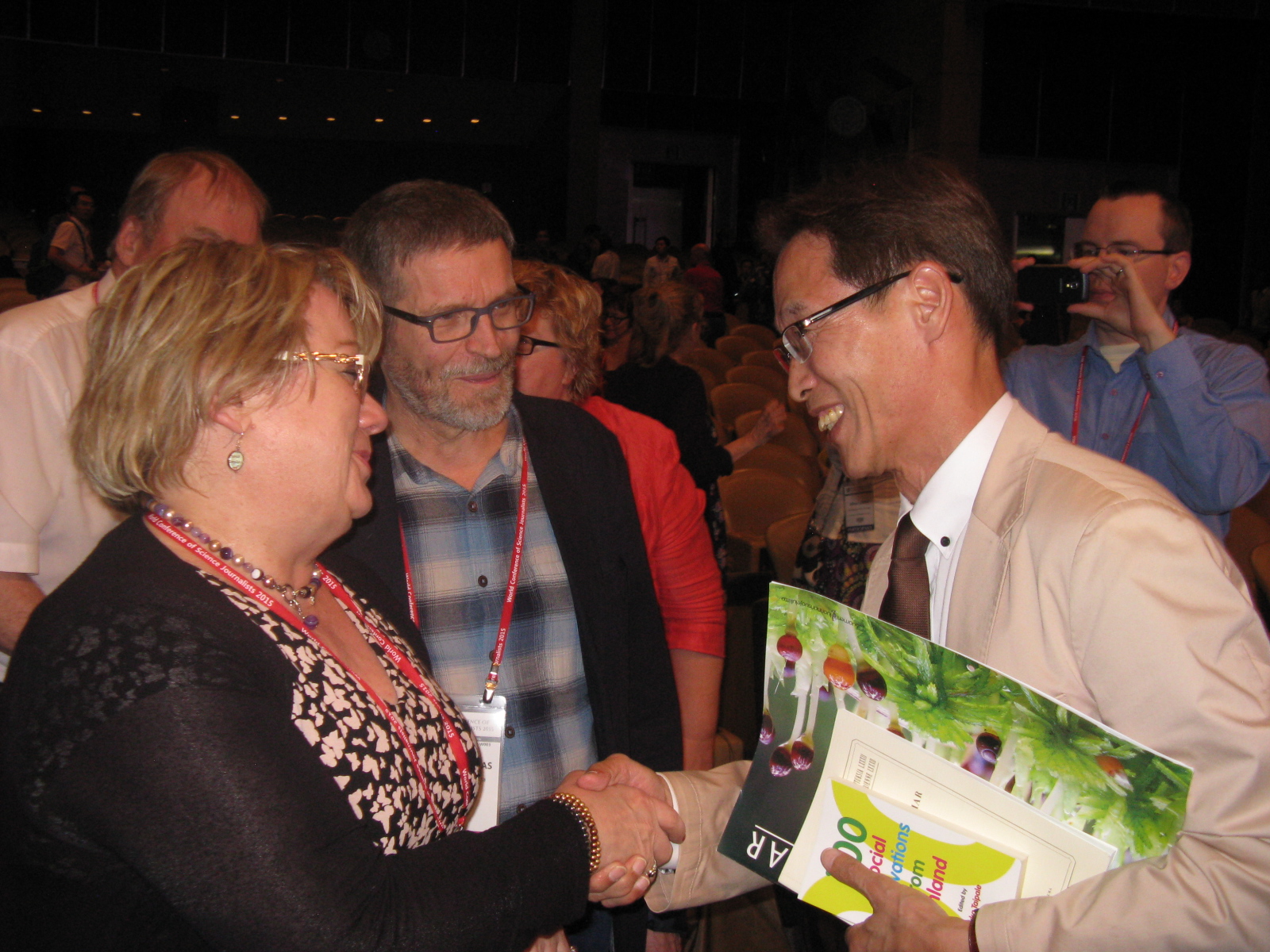
    Shim Jae-eok--the deep one (in translation) and hearty (c) Goede
    Shim Jae-eok–the deep one (in translation) and hearty (c) Goede

    “We motivated you to expand your horizon”, Shim said, picking up on the conference motto. With this new knowledge please contribute “to narrow the gap of discrimination and conflict in the world”, the president of the Korean Science Journalists Association continued. “I was fueled by your energy and you expanded my own horizon”, before he finished:
    WCSJ Seoul #4 021“See you in San Francisco.”

  • Who am I? And if so—how many?

    Who am I? And if so—how many?

    iiiiii-yaaaaaaa ... (Kampfschrei) (c) Goede
    iiiiii-yaaaaaaa … [battle cry] (c) Goede
    The title of a famous German bestseller applies to science journalists. Day 3 of WCSJ 2015 Seoul tried to identify a rare species by the name of _science journalist_. But before, yesterday’s sexism session blew over, delayed in time and brought some unpredicted results.

    It was in the evening hours. Young Koreans, highly skillfully and determined, presented taekwondo martial arts. As if 30 Bruce Lees had conquered the stage. But a piece of news spread around like wildfire and almost stole the fighters the show. The nobel laureate who had reasoned at the beginning of the conference about the creativity of science was charged to have brought out at midday’s luncheon sexist remarks. On BBC, a witness described what she had heard. Most renowned scientific institutions distanced themselves from the scientist. Media, blogs and twitter glowed.1

    New African term: Science Media Practioner

    Damien Chalaud, WFSJ Ex. Dir. w. moderators Veronique Morin and Curtis Brainard (c) Goede
    Damien Chalaud, WFSJ Ex. Dir. w. moderators Veronique Morin and Curtis Brainard (c) Goede

    In the morning, many participants of the conference had critically looked into themselves in an effort to find their identity. The session “50 Associations. One conversation”, organized by the World Federation of Science Journalists WFSJ, co-organizer of the Seoul conference could have been titled also “Who am I? And if so—how many? To achieve one unifying conversation, the participants need to know who they and their partners are. And that apparently has become in the past couple of years more difficult than ever before.

    Two striking examples. Mandi Smallhorn, president of the African Federation of Science Journalists, stated that the fight about what science journalists are supposed to be has become “vicious”.  To avoid further friction, the Africans have come up with an inclusive term: Science Media Practitioner.

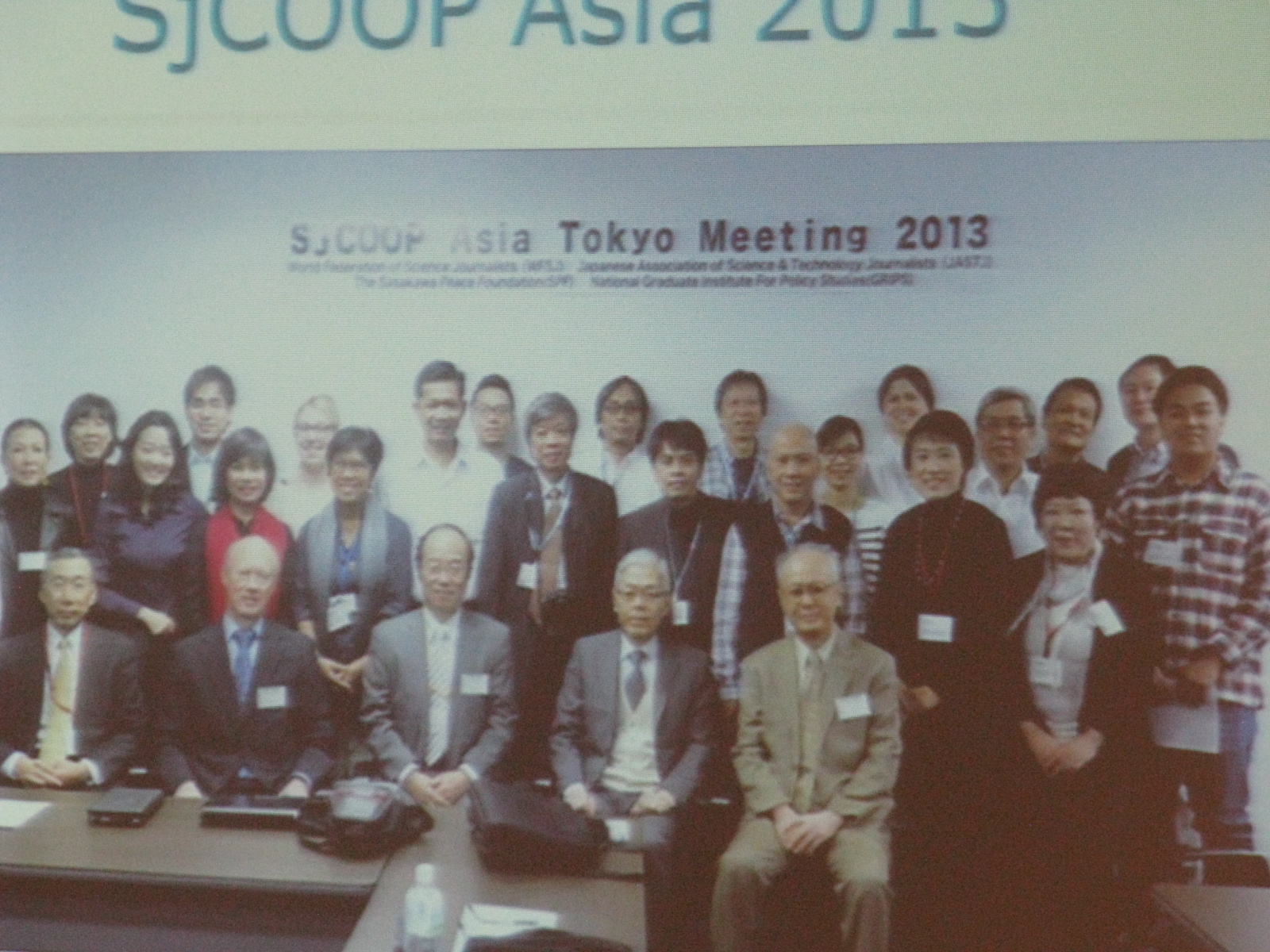
    SjCOOP Training Asia (c) Goede
    SjCOOP Training Asia (c) Goede

    “Make peace, not war!”

    Before, Pallava Bagla, member of the WFSJ board of directors, had described his work as television man, journalist, writer and photographer. Because of all these different hats he calls himself science communicator. Because of regional and cultural differences in the definition of what a science journalist exactly is, Pallava argued that the Federation should be “a wide umbrella”, under which everyone conveniently fits.

    The discussion had been started by Werner Hadorn, Switzerland, WFSJ co-founder, author of its first constitution and president emeritus of the European Union of Science Journalists’ Associations EUSJA. He regretted that in a clash over the disputed identity, science journalists or science communicators, various member organizations had left the European body. “Make peace, not war!”, demanded Werner.

    More joint projects could ignite more communication

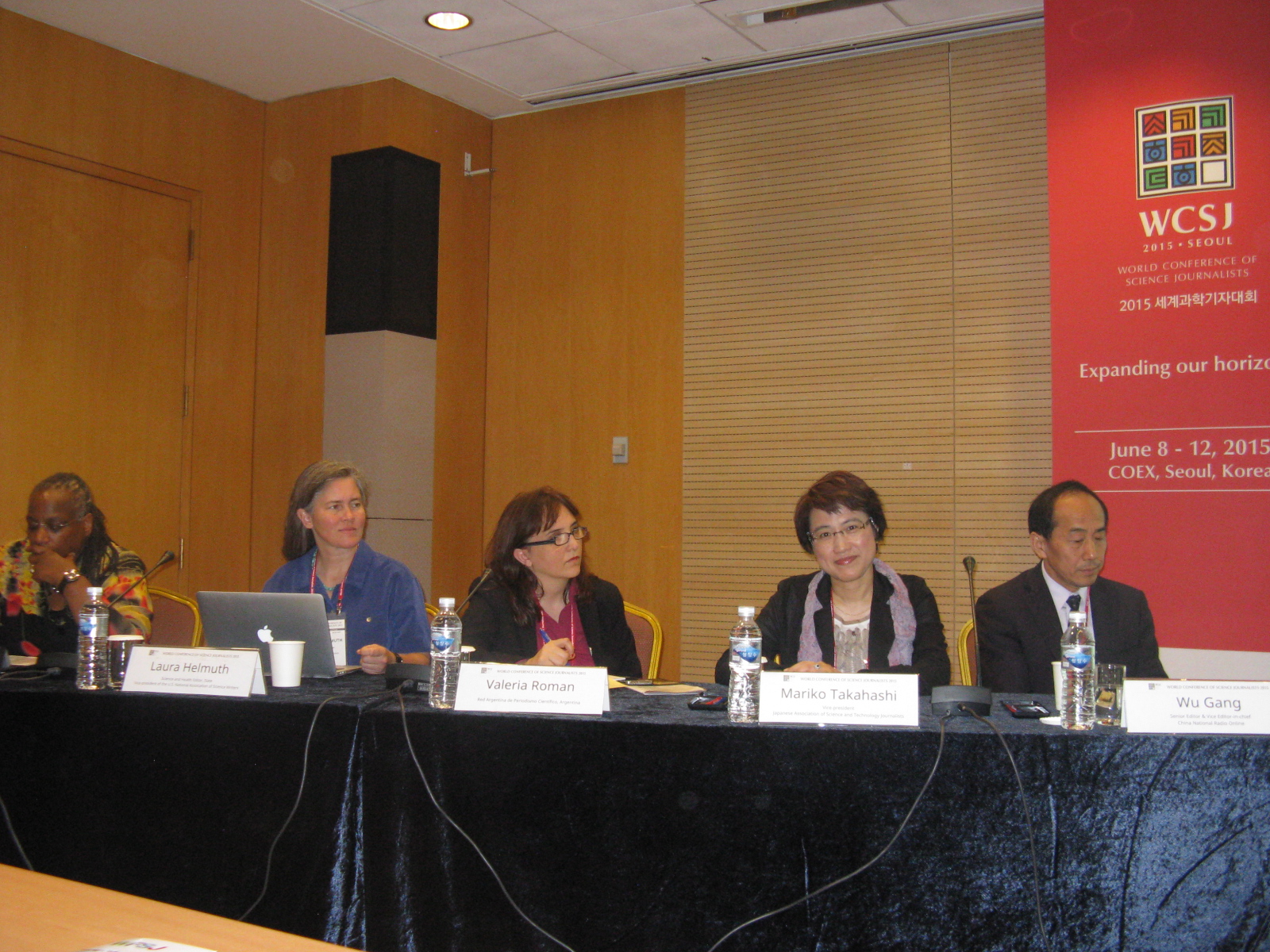
    Communication Panel: Mariko Takahashi (right) and Valeria Roman (next)
    Communication Panel: Mariko Takahashi (right) and Valeria Roman (next) (c) Goede

    As to more and better communication were suggested: webinars and training sessions, innovative communication platforms, regional face to face meetings, in general more inclusion and mutual projects. Valeria Roman, Argentina, had expressed that Latin America could benefit from more Federation activities in her region which automatically would improve communication.

    Before, Mariko Takahashi, Japan, had said that “the engagement in joint projects is important for communication”. Her own association, JASTJ, founded in 1994, benefited a lot from the SjCOOP Asia program, which consolidated already Africa in the Arabic region.

    Science Journalism for famers: Luisa Massarani (c) Goede
    Science Journalism for farmers: Luisa Massarani (c) Goede

    Science Journalism must be engaging

    The 3rd day’s schedule included other sessions which put the profession under the magnifying glass. Luisa Massarani, Brazil, claimed that “science journalism always deals with the society in general and sustainable development in particular”. Journalists needed to supply farmers in the developing world with “reliable sources, informing and engaging them in new techniques”. Which is to say, farmers have to become part of the process.

    But even and especially a high-tech country like Korea, one of the most advanced in the world, needs scrutiny. Cheol-woo Oh, Seoul-based science reporter expressed very clearly that the media way too often just copies press releases and thus “falls into the traps of promotion”.  He criticized that “we depend heavily on scientists and don’t dig deeper”. Quality science journalism in Korea still had a long way to go.

    Shape up: Cheol-woo Oh (right) (c) Goede
    Shape up: Cheol-woo Oh (right) (c) Goede

    D-Day: Copenhagen or San Francisco?

    A separate article will dig deeper into the local scene and describe a visit at the Korea Foundation for the Advancement of Science & Creativity KOVAC. But before, many people are very anxious to find out which city won the bid for the venue WCSJ 2017, Copenhagen or San Francisco. In a couple of hours’ time it will be announced before the WCSJ GA 2015.

    Growing SUSPENSE …

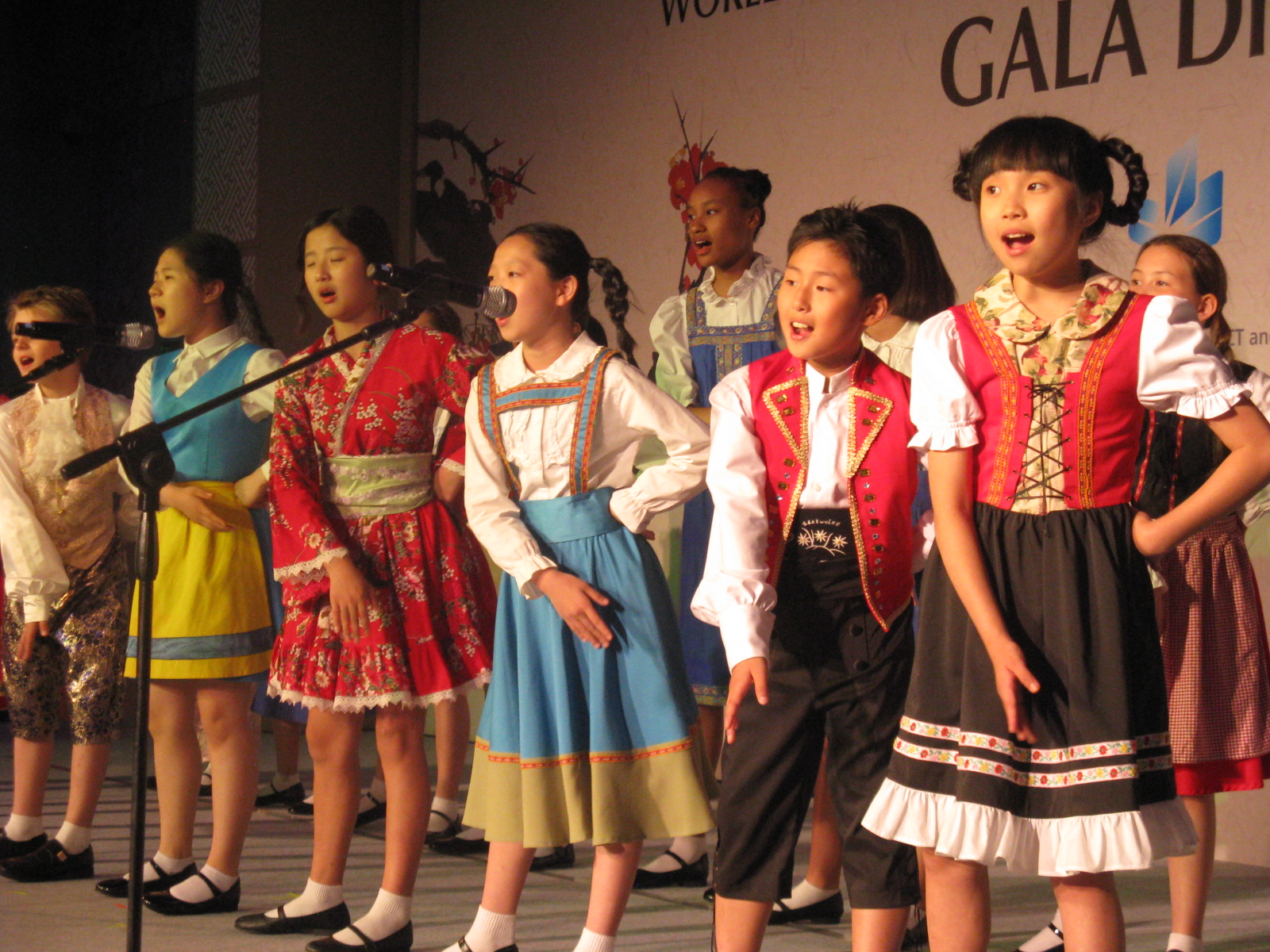
    Traditional dressing (c) Goede
    Traditional dressing (c) Goede

    1 http://time.com/3915617/women-science-tim-hunt-nobel-sexist


    http://www.theguardian.com/science/brain-flapping/2015/jun/10/tim-hunt-old-men-women-controversy-science

    http://www.bbc.com/news/science-environment-33075224